




















Artificial intelligence can affect an R&D tax claim in two ways.
HMRC uses AI and machine-learning tools within its wider tax administration, while businesses and advisers may use generative AI to organise evidence, analyse records or draft claim material.
However, HMRC’s published information does not establish that an AI system automatically approves or rejects individual R&D claims.
Its July 2026 Transformation Roadmap update confirms extensive internal AI adoption, including more than 28,000 Microsoft Copilot licences by March 2026, but says human review remains part of activities such as AI-assisted call summarisation.
Businesses can use AI as an administrative aid, but it should not replace technical judgement, tax analysis or human approval. Every project description, expenditure figure and eligibility statement must remain accurate and supported by evidence.
HMRC’s guidance for generative-AI tax software expressly says AI should support, not replace, human judgement and that taxpayers remain responsible for the accuracy of their returns.
Key takeaways :
- HMRC has confirmed broad use and continued expansion of AI, but that does not prove that R&D claims are being decided automatically.
- A 2025 tribunal case required HMRC to respond more transparently to a request about generative AI in its R&D Tax Credits Compliance Team.
- HMRC’s current R&D forms do not list a standalone question asking whether generative AI helped prepare the claim.
- Companies remain responsible for the accuracy of AI-assisted claims, even when an accountant, tax adviser or software platform is involved.
- Using or developing an AI product does not automatically qualify as R&D. The project must seek an advance in science or technology by resolving scientific or technological uncertainty.
What Does HMRC R&D Tax Claim Transparency AI Mean?
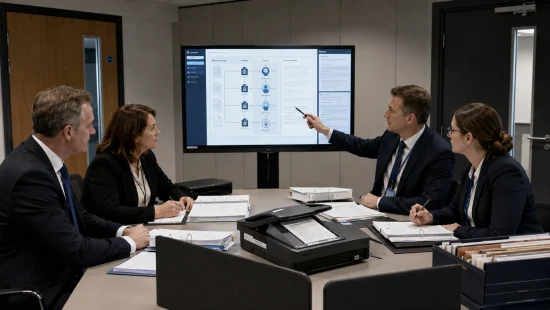
The phrase HMRC R&D tax claim transparency AI brings together three forms of transparency.
Transparency about HMRC’s use of AI
Businesses may reasonably want to understand whether AI is being used to:
- identify higher-risk R&D claims
- summarise technical submissions
- analyse claim data
- prepare correspondence
- recommend compliance action
- support or influence decisions
The central issue is not simply whether HMRC owns or uses AI tools. It is whether taxpayers can understand how material decisions are reached, what safeguards apply and where human judgement enters the process.
Transparency from Companies Making Claims
Claimants must provide enough information for HMRC to understand the company, its advisers, its qualifying expenditure and the projects underlying the claim.
The Additional Information Form requires the contact details of the principal senior internal person responsible for the claim and all agents involved in advising on, analysing or preparing it.
It also requires project and expenditure information for the relevant accounting period.
Transparency from AI Software and Advisers
In January 2026, HMRC published expectations for generative-AI software used to help customers submit tax returns or other information.
The guidance calls for:
- transparent AI use
- reliable source data
- human oversight and control
- strong privacy and security measures
- ethical operation
Users should be able to identify the source data, understand how it is processed, recognise the model’s limitations and raise concerns about inaccurate results. HMRC specifically warns about hallucinations: plausible-looking information that is incorrect or invented.
Although this guidance is directed at software developers, its principles provide a useful standard for businesses choosing an AI-assisted R&D tax platform.
Does HMRC use AI to assess R&D tax claims?
What has HMRC Publicly Confirmed?
HMRC’s 2025 Transformation Roadmap said it planned to expand AI use to target compliance activity, direct taxpayers towards guidance, follow up unpaid tax and support staff with administrative work.
The department’s July 2026 progress update gives more detail. By March 2026, HMRC had issued more than 28,000 Microsoft Copilot licences for tasks such as drafting and summarising documents, emails and meetings.
It was also piloting AI call summaries with a human reviewer and creating test environments using synthetic data so that new tools could be tested without risking customer data.
These statements confirm significant AI adoption across HMRC. They do not, on their own, establish that an AI system makes final decisions on individual R&D tax claims.
What Happened in the Elsbury AI Transparency Case?
In December 2023, Tom Elsbury submitted a Freedom of Information Act request asking about large language models and generative AI within HMRC’s R&D Tax Credits Compliance Team.
HMRC initially confirmed that it held information within the scope of the request but withheld it under an exemption concerning prejudice to tax assessment or collection.
During the Information Commissioner’s investigation, HMRC changed its position and sought to neither confirm nor deny whether it held the information.
The First-tier Tribunal allowed Elsbury’s appeal in Elsbury v Information Commissioner [2025] UKFTT 915 (GRC).
It found that HMRC’s reversal was untenable after the department had twice confirmed that it held relevant information.
The tribunal also concluded that the Information Commissioner had placed too much weight on unsubstantiated risks of increased fraud and too little weight on the public benefits of transparency.
HMRC was ordered to state whether it held information corresponding to each part of the request and either supply it or issue a valid refusal notice.
What the Tribunal Did not Decide?
The ruling concerned information rights and the public-interest balance under the Freedom of Information Act.
It did not establish that:
- HMRC routinely used ChatGPT to reject R&D claims
- claim decisions were fully automate
- every formulaic HMRC letter was AI-generated
- an apparent use of AI automatically invalidated an enquiry
- every affected claimant had grounds for compensation or appeal
In September 2025, the Financial Times reported that HMRC said its R&D compliance team had not used generative AI as part of its work on claims, although HMRC acknowledged testing an internal R&D summarisation tool on a small number of cases after caseworker action had already been completed.
The newspaper also reported allegations that some individual caseworkers had used public AI tools without authorisation. Those allegations should be distinguished from the tribunal’s formal findings.
Can Businesses use AI to prepare an R&D Tax Claim? 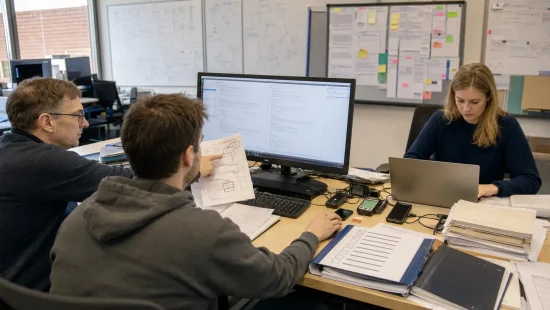
HMRC’s current published Additional Information Form requirements do not list a separate field asking whether generative AI assisted with a claim. That is an observation about the present form, not a guarantee that AI use could never become relevant during a compliance check.
Using AI does not remove any existing responsibility. A named senior person within the company remains responsible for the claim, and every adviser involved must be identified where required.
Appropriate uses of AI
AI may help a business:
- organise project records by date
- summarise approved meeting notes
- create questions for interviews with developers or engineers
- compare different versions of a technical narrative
- identify gaps between project records and draft explanations
- check consistency between cost schedules and project dates
- classify invoices or payroll records for subsequent human review
Decisions AI should not Make Alone
An AI system should not independently:
- decide whether a project satisfies the statutory R&D test
- invent the technological baseline or state of existing knowledge
- determine what a competent professional could readily deduce
- estimate staff time without supporting records
- choose qualifying costs without tax review
- manufacture experiments, failures or technical uncertainties
- submit or approve the final claim
HMRC’s 2026 software guidance says reliable AI systems should draw on legislation, established case law and official HMRC publications.
It also says complex or nuanced cases should be flagged for further investigation or qualified professional advice.
What information must an HMRC R&D Tax Claim Include?
Claim Notification
For accounting periods beginning on or after 1 April 2023, a company may need to submit a claim notification when it is claiming for the first time or its previous claim falls outside the relevant three-year test.
The notification period generally ends six months after the end of the company’s period of accou
Where notification is required, missing the deadline makes the R&D claim invalid. The form asks for the senior internal R&D contact, all relevant agents, the accounting dates and a high-level summary of the planned activities.
Additional Information Form
A separate Additional Information Form must support the R&D claim. It must be submitted before the CT600 Company Tax Return or earlier on the same day.
When both are filed on the same day, the Additional Information Form must go first. Filing the CT600 first can result in the claim being rejected and removed from the return.
The form covers company details, responsible contacts, qualifying expenditure and project descriptions.
Depending on the number of projects, a company must describe all projects or a selection accounting for the required proportion of qualifying expenditure.
Technical Project Descriptions
A defensible description should explain:
- the field of science or technology
- the existing technological baseline
- the advance the company sought
- the scientific or technological uncertainty
- why a competent professional could not readily resolve it
- the work undertaken
- the testing, successes and failures
- whether and how the uncertainty was resolved
HMRC asks for sufficient detail to show why the work was not straightforward, which methods were used and why any uncertainty remained unresolved.
A separate supporting report may also include the claim methodology, sampling approach and details of competent professionals.
| Claim component | Information required | Suitable AI assistance | Essential human check |
| Claim notification | Company, period, contacts and planned activities | Organising source information | Confirming whether notification is required and checking the deadline |
| Additional Information Form | Company details, agents, projects and expenditure | Structuring draft answers | Verifying every fact, date and figure |
| Technical narrative | Advance, baseline, uncertainty and work performed | Summarising approved records | Review by a competent professional |
| Cost calculation | Qualifying expenditure by category and project | Comparing schedules with source files | Tax and accounting reconciliation |
| CT600 | Correct claim entries and confirmations | Consistency checks | Final authorised filing review |
| Evidence file | Records supporting the narrative and costs | Indexing and document classification | Confirming provenance and completeness |
Does Developing or using AI Qualify for R&D tax Relief?
Using advanced technology is not enough. HMRC says a qualifying project must seek an advance in the overall field of science or technology, not merely an improvement for the claimant’s own business.
It must also seek to resolve uncertainty that an expert could not determine readily after considering the available evidence.
Routine use of the following would not ordinarily qualify by itself:
- a commercial chatbot
- an off-the-shelf language model
- an established machine-learning platform
- a standard application programming interface
- ordinary workflow automation
- routine model configuration or integration
An AI project may qualify where the company attempts to resolve a genuine technological limitation, for example, a non-routine problem involving model reliability, computing requirements, latency, data processing or system performance, and the solution was not readily deducible by a competent professional.
The relevant question is not, “Did the company build something innovative?” It is, “Did the project seek an appreciable advance in science or technology by resolving qualifying uncertainty?”
What are the Risks of AI-generated R&D Tax Claims?

Hallucinated or Unsupported Content
Generative AI may create convincing but incorrect descriptions of:
- technical limitations
- available technologies
- project dates
- experiments
- staff activities
- test results
- failed approaches.
HMRC’s own generative-AI guidance identifies bias, inaccuracies and hallucinations as limitations users must be told about.
Generic Technical Narratives
A statement such as “we developed an innovative AI platform” does not explain the baseline, advance or uncertainty.
Generic wording can make it difficult to distinguish genuine R&D from ordinary commercial development, integration or product improvement.
Inconsistent Technical and Financial Records
Risk increases when the narrative conflicts with:
- payroll records
- employee time allocations
- project-management data
- accounting periods
- invoices
- the claim notification
- the CT600
- other projects described in the Additional Information Form.
Confidentiality and Privacy Problems
R&D records may contain source code, trade secrets, personal data, customer information and security details.
Businesses should not upload this material to a public AI tool without understanding its contractual terms, access controls, retention policy and data-processing arrangements.
HMRC expects generative-AI tax software to incorporate privacy by design, UK GDPR compliance and strong security measures.
Overreliance on an Adviser or Platform
An accountant, consultant or software provider may help prepare a claim, but that does not relieve the company of responsibility for its return.
HMRC’s AI software guidance expressly says users must be reminded that the accuracy of the tax return remains their responsibility.
How can a business create a transparent AI-assisted R&D claim?
Assess Eligibility Before Drafting
Begin with the scientific or technological project. Identify the baseline, proposed advance and uncertainty before asking AI to generate a narrative.
Collect Contemporaneous Evidence
Relevant records may include:
- project plans
- design documents
- issue trackers
- test results
- failed prototypes
- technical meeting notes
- emails recording decisions
- payroll record
- invoices
- staff-time evidence.
Record how AI was Used?
Maintain an internal AI-use log containing:
- the name and version of the tool
- the purpose for which it was used
- the documents or data supplied
- the person operating it
- the output produced
- factual corrections made
- the final human reviewer
HMRC does not currently prescribe this particular audit log. It is a practical control derived from HMRC’s stated expectations concerning transparency, source identification, version control and human oversight.
Obtain Competent-professional Review
The technical reviewer should be able to explain the relevant field, the existing knowledge, the advance sought and why the solution was not readily deducible.
A name or job title alone is not enough. The reviewer must engage with the actual technical evidence.
Reconcile the Narrative and Costs
Project dates, qualifying activities, employee roles and expenditure should tell the same story across every form and supporting schedule.
Require Final Human Approval
The final reviewer should check the source evidence rather than simply approving a polished AI-generated summary.
| Audit question | Evidence to retain |
| What task did AI perform? | AI-use log and dated draft |
| What information was supplied? | Approved source-document register |
| Can each material statement be traced? | Citation or evidence map |
| Who checked the output? | Reviewer name, role and date |
| What corrections were made? | Version comparison or review notes |
| Were costs reconciled? | Payroll, invoice and cost schedules |
| Was sensitive information protected? | Privacy assessment and redaction record |
| Who authorised submission? | Director or authorised officer approval |
Example: An AI-assisted Software Claim
Consider a UK software company using a commercial language model to develop a customer-support system.
A weak description might say:
The company created a unique AI assistant that improved customer service and reduced response times.
That describes a commercial benefit, not necessarily qualifying R&D.
A more useful evidence-led description would identify a specific technological limitation for example, an unresolved reliability problem when processing specialist terminology under defined performance constraints.
It would explain:
- what existing methods could achieve
- why those methods were insufficient
- what an experienced professional could not readily determine
- which alternatives were tested
- what failed;
- what measurable technological improvement was sought
AI could help organise test records and produce a first draft. The project’s engineers would still need to verify the baseline, experiments, results and uncertainty, while a tax reviewer would assess whether the activities and expenditure met the relevant R&D rules.
What Should a Company Do if HMRC Opens a Compliance Check?

Preserve the exact claim, Additional Information Form, CT600, calculations and supporting records that were submitted.
Answer HMRC’s specific questions rather than sending generic promotional material. Where a draft contains an error, correct it promptly instead of defending it merely because it came from an adviser or AI tool.
Where HMRC appears to misunderstand the project, explain the facts through evidence: identify the technical baseline, the uncertainty, the work performed and the competent professional’s reasoning.
An unusual writing style or formulaic HMRC letter does not prove that AI made the decision.
A challenge should focus on the underlying facts, evidence, statutory conditions and procedural fairness. Material or disputed claims may require advice from a suitably qualified tax professional.
Common Misconceptions about HMRC, R&D claims and AI
“HMRC has admitted that AI automatically rejects R&D claims”
No. HMRC has confirmed extensive general AI adoption, but its public statements do not establish an autonomous system that makes final R&D claim decisions.
“An AI-written claim is automatically invalid”
Not simply because AI was used. A claim can still fail because it is late, incomplete, inaccurate, unsupported or does not satisfy the R&D eligibility rules.
“Any company developing an AI product qualifies”
No. The company must seek an advance in science or technology and resolve genuine scientific or technological uncertainty.
“Human review makes every AI output reliable”
No. Human oversight is useful only when the reviewer checks source evidence, understands the subject and corrects errors.
“The adviser is responsible for the whole claim”
The adviser may have professional and contractual obligations, but the claimant company remains responsible for the information submitted in its Corporation Tax return.
Practical Checklist for an AI-assisted R&D Claim
Before submission, confirm that:
- the correct R&D scheme has been identified
- any required claim notification was submitted on time
- the Additional Information Form will be submitted before the CT600
- the responsible senior company contact is identified
- every relevant agent is disclosed
- the project seeks an advance in the overall field
- the technological uncertainty is explained
- the competent professional has reviewed the narrative
- costs agree with payroll, invoices and accounting records
- AI-generated statements have been traced to reliable evidence
- confidential information has been handled securely
- a copy of every submitted form has been retained
- an authorised person has approved the final claim
Conclusion: Transparency matters on Both sides of an R&D Claim
HMRC R&D tax claim transparency and AI is a two-way issue.
HMRC’s expanding use of artificial intelligence increases the importance of accountable processes, appropriate safeguards and clear human responsibility.
At the same time, companies using AI to prepare claims must be transparent internally about how the technology was used and must verify every material statement against reliable evidence.
AI can make evidence easier to organise and drafts easier to review. It cannot turn routine development into qualifying R&D, replace a competent professional or transfer responsibility away from the claimant.
The most defensible approach is an evidence-led claim supported by a clear technical explanation, reconciled expenditure, meaningful human review and a documented audit trail.
Frequently asked questions
Does HMRC use AI to check R&D tax claims?
HMRC uses AI and machine learning within its wider tax administration and compliance activities. Public information does not establish that AI independently decides individual R&D claims. HMRC’s 2026 update says it is using AI for activities including document assistance and call summarisation, with human review in the latter process.
Can ChatGPT be used to write an R&D tax claim?
It can assist with organisation or drafting, but it should not determine eligibility or invent technical content. Every statement must be checked against company records and reviewed by people with suitable tax and technical expertise.
Must a company tell HMRC that AI helped prepare the claim?
HMRC’s currently published Additional Information Form requirements do not list a separate AI-use declaration. Companies must, however, identify the responsible senior internal contact and all agents involved in advising on or preparing the claim.
Will HMRC reject an AI-generated R&D claim?
A claim is not necessarily rejected because AI helped draft it. It may be rejected or challenged when mandatory forms are missing, deadlines are not met, information is inaccurate, expenditure is unsupported or the project does not satisfy the statutory R&D tests.
Does developing an AI chatbot qualify for R&D tax relief?
Not automatically. The project must seek an advance in science or technology by resolving uncertainty that a competent professional could not readily resolve. Routine use or configuration of an existing model is not enough.
Who is responsible when AI introduces an error?
The company remains responsible for the accuracy of its tax return. Directors, employees, competent professionals and advisers should have clearly defined review and approval responsibilities.
What evidence should support an AI-related R&D project?
Useful evidence includes the technological baseline, design decisions, experiments, failed approaches, test results, project dates, competent-professional explanations, staff records and qualifying-cost calculations.
General information notice: This guide is not tax or legal advice. R&D relief depends on the company’s accounting period, facts, contracts, expenditure and technical activities. Check current HMRC guidance and obtain qualified advice where appropriate.
Sources
- HMRC: Additional information required for R&D tax relief claims
https://www.gov.uk/guidance/submit-detailed-information-before-you-claim-research-and-development-rd-tax-relief
- HMRC: Tell HMRC you want to claim R&D tax relief
https://www.gov.uk/guidance/tell-hmrc-that-youre-planning-to-claim-research-and-development-rd-tax-relief
- HMRC: Check if you can claim R&D tax relief
https://www.gov.uk/guidance/corporation-tax-research-and-development-rd-relief
- HMRC: Guidelines for using generative AI in tax software
https://www.gov.uk/guidance/guidelines-for-using-generative-artificial-intelligence-if-youre-a-software-developer
- HMRC Transformation Roadmap: Executive summary
https://www.gov.uk/government/publications/hmrc-transformation-roadmap/executive-summary-hmrcs-transformation-roadmap
- HMRC Transformation Roadmap: Update 2026
https://www.gov.uk/government/publications/hmrc-transformation-roadmap-progress-update-2026/hmrc-transformation-roadmap-update-2026

[…] involve qualifying development expenditure, although whether particular work meets the rules for HMRC R&D tax claims depends on whether it seeks an advance in science or technology and resolves genuine technological […]