







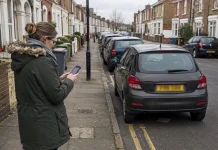










When you report an untaxed vehicle to DVLA, your report is anonymous and the information is investigated.
DVLA may check the vehicle’s tax and SORN status, compare the details with its records and review evidence showing where the vehicle is being used or kept.
A report does not automatically result in the vehicle being clamped or removed. DVLA decides whether enforcement action is appropriate based on the vehicle’s status, its location and the evidence available.
Possible action includes a penalty, recovery of unpaid vehicle tax, wheel-clamping, removal to a vehicle pound, debt collection or prosecution.
Key Takeaways:
- Reports made through the official GOV.UK service are anonymous.
- DVLA investigates the information but does not guarantee immediate enforcement.
- The vehicle’s registration number, description and exact location are required.
- DVLA may check its records and consider evidence from public reports, enforcement officers and ANPR cameras.
- An untaxed vehicle may be penalised, clamped, impounded or referred for court action.
- A vehicle with a SORN must normally be kept off public roads.
- An abandoned vehicle may also need to be reported to the local council.
Is Reporting an Untaxed Vehicle to DVLA Anonymous?

Yes. GOV.UK states that a report of an untaxed vehicle is anonymous and will be investigated. The reporting service does not require you to identify yourself to the vehicle’s registered keeper.
The keeper should not assume that a neighbour or another particular person submitted the report.
DVLA can receive information about untaxed vehicles from several sources, including:
- members of the public
- police officers
- local authority enforcement officers
- Automatic Number Plate Recognition cameras
- DVLA’s wheel-clamping contractor
A vehicle may therefore come to DVLA’s attention even when nobody nearby has personally reported it.
What Happens After You Report an Untaxed Vehicle?
After a report is submitted, DVLA can examine the vehicle’s official status and the information supplied by the person reporting it.
The exact internal process is not published for every case, but current enforcement guidance explains the records and evidence DVLA may use.
DVLA Checks the Vehicle’s Tax Status
DVLA can compare the registration number in the report with the information held on its vehicle register.
The register shows whether the vehicle has valid tax or has been declared off the road through a Statutory Off Road Notification, known as a SORN.
DVLA also regularly scans its register to identify keepers who have failed to renew their tax or make a SORN.
DVLA Reviews the Vehicle’s SORN Status
A SORN allows a vehicle to remain untaxed only when it is kept off public roads. This could include keeping it in a garage, on a private driveway or on other private land.
A SORN does not normally allow the vehicle to be parked or driven on a public road. DVLA can therefore consider both the vehicle’s official SORN status and where it was reportedly seen.
DVLA Checks the Reported Location
The location is important because different rules apply to vehicles on public roads and vehicles kept on private property.
When making a report, you must provide the street name, town and postcode where the vehicle was seen. These details help DVLA establish whether the report concerns a vehicle being used or kept on a public road.
DVLA May Consider an On-Road Sighting
Some vehicle-tax offences are identified through evidence that a vehicle was being used or kept on a public road.
An on-road sighting may be supplied by a member of the public, the police, a council enforcement officer, an ANPR camera or DVLA’s wheel-clamping contractor.
Enforcement officers must check the DVLA register before taking clamping action against a vehicle identified on the road.
What Action Can DVLA Take Against an Untaxed Vehicle?
DVLA does not apply the same action in every case. The outcome depends on the offence, the evidence and whether the vehicle was being used or kept on a public road.
Issue a Late-Licensing Penalty
Being the registered keeper of an untaxed vehicle can be identified automatically through DVLA’s records.
Current DVLA guidance states that a late-licensing penalty is £80. It is reduced to £40 when paid within 33 days. If it remains unpaid, the case may be referred to a debt collection agency.
Send an Out-of-Court Settlement Letter
Where an untaxed vehicle has been identified as being used or kept unlawfully, DVLA may offer an out-of-court settlement.
The amount can include a fixed charge and a multiple of the outstanding vehicle tax. The calculation depends on the type of offence and whether a SORN was in force.
Recover Outstanding Vehicle Tax
DVLA may request payment of the unpaid vehicle tax in addition to a penalty or settlement.
Taxing the vehicle after it has been reported does not necessarily remove responsibility for an earlier period in which the vehicle was untaxed or used unlawfully.
Clamp or Impound the Vehicle
An untaxed vehicle may be wheel-clamped or removed to a vehicle pound.
This can happen when an untaxed vehicle is on a public road, including when it has a SORN. It may also happen when an untaxed vehicle is kept off the public road without a valid SORN.
Use Debt Collection or Court Action
Unpaid penalties may be referred to a debt collection agency. If an out-of-court settlement is not paid, the case may be pursued as a criminal offence through the magistrates’ court.
DVLA says the debt collection agencies it uses may contact people by letter, telephone, text message or email. They do not visit a person’s home or workplace on DVLA’s behalf.
Can an Untaxed Vehicle Be Clamped Immediately?
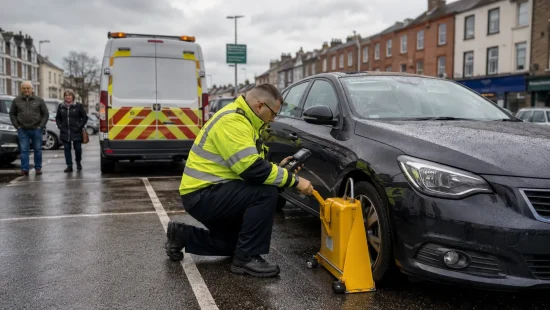
Yes, an untaxed vehicle can be clamped or immediately impounded when the legal conditions are met. However, reporting a vehicle does not guarantee that it will be clamped straight away.
GOV.UK states that a vehicle may be clamped or removed if it is untaxed and:
- it is on a public road, even if it has a SORN
- it is not on a public road and does not have a SORN
Before an on-road vehicle is clamped, its status must be checked against the DVLA register. The vehicle may have recently been taxed, transferred to a new keeper or recorded incorrectly.
What Penalties Can the Registered Keeper Face?
The following amounts are based on DVLA enforcement guidance updated on 15 July 2026.
| Offence or enforcement action | Possible consequence | Important qualification |
| Being the registered keeper of an untaxed vehicle | £80 late-licensing penalty, reduced to £40 if paid within 33 days | The offence can be identified automatically from DVLA’s register |
| Using an untaxed vehicle on a public road without a SORN | £30 plus one-and-a-half times the outstanding tax | If unpaid, the court penalty is £1,000 or five times the tax due, whichever is greater |
| Using an untaxed vehicle on a public road with a SORN | £30 plus twice the outstanding tax | If unpaid, the court penalty is £2,500 or five times the tax due, whichever is greater |
| Keeping an untaxed vehicle | £30 plus one-and-a-half times the outstanding tax | If unpaid, the court penalty is £1,000 or five times the tax due, whichever is greater |
| Clamp release | £100 when paid within the first 24 hours | Vehicle tax or a surety payment may also be required |
| Release from a vehicle pound | £200 impound release fee | A storage fee of £21 per day also applies |
| Vehicle released before being taxed | Surety starting at £160 for cars, motorcycles and light goods vehicles | Higher sureties apply to larger vehicles |
| Vehicle not reclaimed | Possible sale, breaking or crushing | DVLA stores vehicles for a statutory period of between 7 and 14 days |
The precise amount will depend on the offence, the outstanding tax and whether the keeper pays, challenges or ignores the demand.
How Long Does DVLA Take to Act on a Report?
DVLA does not publish a guaranteed response or enforcement time for reports of untaxed vehicles.
The official service says the information will be investigated but does not promise action within a specific number of hours or days.
The time required may depend on:
- whether the vehicle’s tax record has recently changed
- whether the registration number is correct
- whether the location information is accurate
- whether the vehicle remains at the reported location
- whether an on-road sighting can be confirmed
- whether another authority or contractor is involved
- whether immediate clamping is legally justified
A lack of visible action does not necessarily mean the report was ignored. DVLA may send a penalty or settlement letter to the keeper instead of immediately visiting or removing the vehicle.
Will DVLA Tell You the Outcome of Your Report?
The GOV.UK reporting service does not promise a progress report or a notification explaining the final enforcement decision.
Because the service is anonymous and does not operate as a public case-tracking system, you should not expect to receive details about penalties, correspondence, clamping decisions or court proceedings.
Information about the registered keeper and any enforcement action may also involve personal or legal details that would not normally be disclosed to the person who submitted the report.
What Information Do You Need to Report an Untaxed Vehicle?
Before submitting a report, GOV.UK requires you to check whether the vehicle is currently taxed.
You will then need:
- the vehicle registration number
- the make
- the model
- the colour
- the street name where the vehicle was seen
- the town
- the postcode
You cannot complete the official report without these vehicle and location details.
Check the registration number carefully because one incorrect character could identify a different vehicle.
You should also remember that recently approved tax or SORN applications can take up to two working days to appear in the online record. A vehicle that appears untaxed may therefore have been taxed very recently.
Can You Report an Untaxed Vehicle on Private Property?
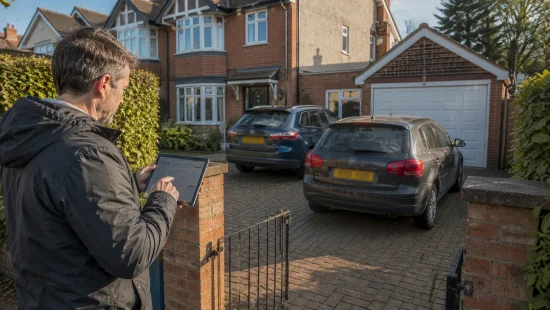
The standard GOV.UK reporting service is intended for an untaxed vehicle seen on a road. Whether a vehicle on private property is breaking the rules depends largely on whether it has a valid SORN.
A vehicle with a valid SORN can normally be kept:
- in a garage
- on a private driveway
- on other private land
A SORN vehicle must not normally be used or kept on a public road. It can generally only be driven on a public road to or from a pre-booked MOT or another authorised testing appointment. Using it on the road for another reason could lead to prosecution and a fine of up to £2,500.
An untaxed vehicle kept away from a public road without a valid SORN may still be subject to enforcement and could potentially be clamped or removed.
Is an Untaxed Vehicle the Same as an Abandoned Vehicle?
No. A vehicle can be untaxed without being abandoned, and an abandoned vehicle may still be taxed.
DVLA handles reports relating to vehicle tax. Suspected abandoned vehicles should generally be reported to the relevant local council.
Councils consider several factors when deciding whether a vehicle is abandoned, including:
- how long it has remained in one place
- whether it has a registered keeper
- whether it is severely damaged or unroadworthy
- whether it has missing wheels or windows
- whether it has been burnt out
- whether its registration plates are missing
The fact that a vehicle is untaxed can be relevant, but it does not by itself prove that the vehicle has been abandoned.
A vehicle may therefore need to be reported separately:
- to DVLA for the suspected tax offence
- to the local council if it appears abandoned
- to the police for an immediate driving, insurance or safety concern
- through the relevant GOV.UK service if it is being used without a valid MOT
What Happens If the Owner Taxes the Vehicle After It Is Reported?
Taxing the vehicle may correct its current status. However, it may take up to two working days for an approved vehicle-tax application to appear in the online record.
Taxing the vehicle after it has been reported does not necessarily cancel liability for an earlier offence.
If DVLA’s records or an on-road sighting show that the vehicle was previously kept or used while untaxed, the registered keeper may still receive:
- a late-licensing penalty
- a demand for outstanding tax
- an out-of-court settlement letter
- a court summons if an earlier demand is not paid
The result will depend on the evidence available and the particular offence DVLA identifies.
What Should You Do If the Vehicle Is Still There?
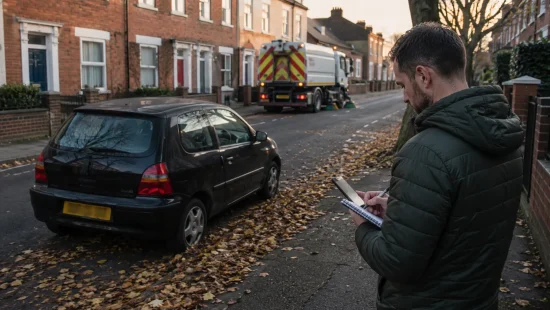
Check the vehicle’s tax status again. If the vehicle was recently taxed or declared off the road, remember that the official record may take up to two working days to update.
If it remains untaxed and is still being kept on a public road, confirm that the original report contained the correct:
- registration number
- make, model and colour
- street name
- town
You should also consider whether another reporting route is more appropriate. Report a vehicle that appears abandoned to the local council, and use the appropriate police service for active driving, insurance or immediate safety concerns.
Do not attempt to move, clamp, obstruct or damage the vehicle yourself. Physical enforcement should be left to DVLA, its authorised contractor, the police or another authority with the necessary legal powers.
Conclusion
When you report an untaxed vehicle to DVLA, the report is anonymous and becomes one source of information the agency can investigate.
DVLA may check the vehicle’s tax and SORN status, its registration details, the reported location and any evidence showing that it was being used or kept on a public road.
Submitting a report does not automatically result in a fine, clamp or removal. Depending on the evidence, DVLA may issue a late-licensing penalty, recover unpaid tax, offer an out-of-court settlement, clamp or impound the vehicle, refer unpaid debts for collection or pursue the case through court.
Checking the vehicle’s status before reporting it and providing accurate vehicle and location information will help DVLA assess the report correctly.
Frequently Asked Questions
Is reporting an untaxed vehicle to DVLA anonymous?
Yes. GOV.UK states that reports made through its official untaxed-vehicle service are anonymous and will be investigated.
Will the registered keeper know who reported the vehicle?
The service is anonymous, and DVLA does not state that the reporter’s identity will be disclosed to the registered keeper.
Does one report mean the vehicle will be clamped?
No. DVLA checks the vehicle’s status, location and available evidence before deciding whether clamping or another action is justified.
How quickly will DVLA investigate the report?
There is no published guaranteed timescale. Record checks, location details and enforcement evidence may affect how long the process takes.
Can a SORN vehicle be parked on a public road?
Normally, no. A SORN vehicle must generally be kept off public roads except for limited journeys such as travelling to a pre-booked MOT.
Can an untaxed vehicle stay on a private driveway?
Yes, provided it has a valid SORN. A vehicle without tax or a SORN may still be subject to enforcement.
Should an abandoned untaxed vehicle be reported twice?
Potentially. Report the tax issue to DVLA and the suspected abandonment to the relevant local council.
Sources
Report an untaxed vehicle — GOV.UK
https://www.gov.uk/report-untaxed-vehicle
Check if a vehicle is taxed — GOV.UK
https://www.gov.uk/check-vehicle-tax
Vehicle enforcement policy — DVLA and GOV.UK
https://www.gov.uk/government/publications/vehicle-enforcement-policy/vehicle-enforcement-policy
DVLA enforcement of vehicle tax, registration and insurance offences — GOV.UK
https://www.gov.uk/government/publications/vehicle-enforcement-policy/dvla-enforcement-of-vehicle-tax-registration-and-insurance-offences
When you need to make a SORN — GOV.UK
https://www.gov.uk/sorn-statutory-off-road-notification
Get a clamped or impounded vehicle released — GOV.UK
https://www.gov.uk/get-a-clamped-or-impounded-vehicle-released
Abandoned vehicles: local authority responsibilities — GOV.UK
https://www.gov.uk/guidance/abandoned-vehicles-council-responsibilities