



















If you have been refused PIP after a stroke, check the date on your decision letter immediately. You will normally need to request a mandatory reconsideration within one month.
Review the points awarded for each daily-living and mobility activity, identify the findings you disagree with and explain how your stroke affects you in practice. Include specific examples involving fatigue, weakness, aphasia, memory, balance or other relevant difficulties.
Submit supporting evidence where available. If the decision is not changed, you may be able to appeal to an independent tribunal.
Key Takeaways:
A PIP refusal is not necessarily the end of your claim. The most important first step is to check the deadline for requesting a mandatory reconsideration, which is usually one month from the date on the decision letter.
PIP is based on how a health condition affects specific daily-living and mobility activities rather than on the diagnosis alone.
This means the strongest challenge will explain what help, supervision, prompting or aids you need and whether you can complete activities safely, repeatedly, to an acceptable standard and within a reasonable time.
Hidden effects of stroke, including fatigue, aphasia, memory problems, poor concentration and visual difficulties, may also be relevant.
If the mandatory reconsideration is unsuccessful, you may be able to appeal to an independent tribunal.
Can You Receive PIP After Having a Stroke?
A person can receive PIP after a stroke, but the diagnosis itself does not automatically result in an award.
Eligibility depends on how the ongoing effects of the stroke limit the person’s ability to complete defined daily-living and mobility activities.
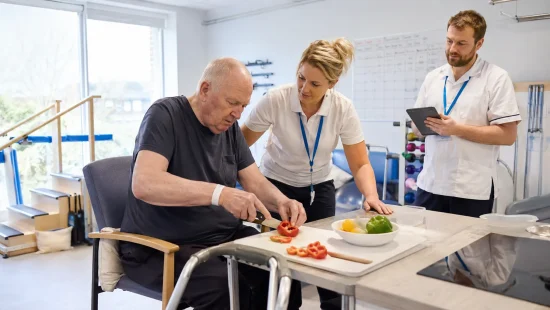
The assessment looks at practical difficulties. For example, one person may struggle to prepare food safely because of weakness in one hand, while another may need support to communicate because of aphasia.
Someone else may be able to perform an activity once but be unable to repeat it because of severe post-stroke fatigue.
PIP has two components: daily living and mobility. Each component can be paid at either a standard or enhanced rate, depending on the number of points awarded. Two people who have both experienced strokes may receive different decisions because their functional difficulties are different.
Why Might a PIP Claim Be Refused After a Stroke?
A refusal does not necessarily mean that the Department for Work and Pensions disputes the fact that the claimant had a stroke.
It may mean that the information provided did not show how the condition met the specific PIP activities and descriptors.
Medical evidence sometimes confirms a diagnosis without explaining the claimant’s day-to-day needs.
A hospital letter may show when the stroke occurred and what treatment was given, but it may not explain whether the person needs help to wash, dress, prepare food, communicate, manage medication or move around safely.
Some stroke effects are also less visible than physical weakness. Post-stroke fatigue, aphasia, memory difficulties, slow information processing, visual-field loss, anxiety and reduced awareness of danger can all have a serious effect on daily life.
If these difficulties are not described clearly, the decision maker may not fully understand their impact.
A claim may also be weakened when the claimant describes only what they can do on a good day. The relevant issue is not simply whether an activity can ever be completed, but whether it can be completed reliably over time.
The decision may also rely on assumptions. Driving may be treated as evidence of broad physical or cognitive ability, attending an assessment may be treated as proof of reliable mobility, or speaking briefly may be interpreted as evidence that communication is unrestricted.
The challenge should explain why such assumptions do not reflect the person’s actual day-to-day difficulties.
How PIP Activities Can Relate to the Effects of a Stroke?
Stroke symptoms do not automatically result in PIP points. The difficulty must relate to a particular activity and meet the wording of a relevant descriptor.
| Stroke-related difficulty | Potentially relevant PIP activity | Practical evidence or example |
| One-sided weakness or poor grip | Preparing food, washing and dressing | Difficulty using knives, lifting pans or fastening clothes |
| Post-stroke fatigue | Several daily-living and mobility activities | Rest periods, inability to repeat tasks and prolonged recovery |
| Aphasia | Communicating verbally | Difficulty expressing or understanding complex information |
| Memory or cognitive problems | Managing treatment, preparing food and budgeting | Missed medication, unsafe cooking or difficulty making decisions |
| Poor balance or falls | Washing, toilet needs and moving around | Supervision, mobility aids and falls records |
| Visual-field loss or neglect | Reading, preparing food and following journeys | Missing obstacles or being unable to navigate safely |
| Anxiety or cognitive overload | Engaging with people and following journeys | Prompting, support or difficulty completing unfamiliar journeys |
The daily-living component considers activities such as preparing food, eating and drinking, managing treatment, washing, dressing, communicating, reading, engaging with other people and making budgeting decisions.
The mobility component considers planning and following journeys as well as physically moving around.
The article should explain that the same symptom may affect more than one activity. Fatigue, for example, may influence dressing, preparing food, washing and moving around.
However, the claimant must still explain the effect within each relevant activity rather than relying on a general statement that they feel tired.
The Four PIP Reliability Rules After a Stroke
A person should normally be treated as able to complete an activity only when they can do it safely, to an acceptable standard, repeatedly and within a reasonable time.
Safety is important where there is a risk of falls, burns, choking, medication errors or disorientation.
A person may technically be able to enter a shower, prepare a meal or walk outdoors, but still be unable to do so safely without help or supervision.
Completing an activity to an acceptable standard means more than simply attempting it. A claimant may be able to put on clothes but dress incorrectly because of coordination or perception problems.
They may be able to wash but consistently miss areas of the body, or they may speak but be unable to communicate important information accurately because of aphasia.
Repetition is especially relevant to post-stroke fatigue. Someone may be able to prepare breakfast in the morning but be unable to prepare another meal later in the day.
A person may walk a particular distance once but be unable to repeat it without a long recovery period.
The reasonable-time rule considers whether the activity takes substantially longer than it would for a person without the relevant limitation.
This can matter where dressing, preparing food, understanding spoken information or walking takes far longer because of weakness, cognitive problems or fatigue.
How to Review the PIP Decision Letter and Assessment Report?

The decision letter should be reviewed activity by activity. The claimant should identify the descriptor selected, the points awarded, the descriptor they believe applies and the reasons the decision does not reflect their actual needs.
The assessment report should then be compared with what the claimant originally said and what the supporting evidence shows.
Any differences should be explained clearly. The challenge should focus on factual inaccuracies and functional impact rather than making general complaints about the assessor.
| Decision statement | Why it is inaccurate | Supporting example or evidence |
| Can prepare food unaided | Cannot safely cut ingredients or lift hot pans | Occupational therapy evidence and recent incidents |
| Can communicate normally | Aphasia affects understanding of complex questions | Speech and language therapy report |
| Can walk 50 metres | Cannot repeat the distance safely without rest | Physiotherapy evidence and mobility diary |
The strongest explanations are specific. Instead of saying that the assessment is wrong, the claimant should describe what happens, how often it happens, what help is needed and what evidence supports that account.
How to Request a PIP Mandatory Reconsideration After a Stroke?
A mandatory reconsideration asks the DWP to review the original decision. The request normally needs to be made within one month of the date on the decision letter, although a late request may sometimes be accepted where there is a good reason for the delay.
The request should deal with each disputed activity separately. It should identify the decision being challenged, explain which descriptor is believed to apply and describe the help, prompting, supervision or aid that is required.
Each section should include at least one real example. A useful example explains what happened, when it happened, whether another person helped, what risk was involved and whether the activity could be completed again later.
The claimant should avoid relying only on the fact that they experienced a stroke. The key question is how the ongoing effects of that stroke prevent them from completing the activity reliably.
What Evidence Can Support a PIP Challenge After a Stroke?
The most useful evidence connects the effects of the stroke to the activities under dispute.
Medical evidence may come from a stroke consultant, GP, occupational therapist, physiotherapist, speech and language therapist, neuropsychologist or community stroke team.
A report is more helpful when it explains what the claimant cannot do, why help is needed, how often the problem occurs and whether the activity can be completed safely and repeatedly.
A letter that simply confirms the stroke diagnosis may add little if it does not describe functional limitations.
Evidence does not have to come only from medical professionals. A daily diary can show patterns of fatigue, falls, communication problems or recovery time. A partner, carer or family member may be able to explain the help they provide.
Medication records, care plans, falls reports and evidence of prescribed aids may also support the claim.
The article should emphasise quality over quantity. A concise occupational therapy report that directly explains why the claimant cannot prepare food safely may be more useful than a large bundle of appointment letters that do not address the disputed activity.
What Happens If Mandatory Reconsideration Is Unsuccessful?

If the DWP does not change the decision, the claimant may be able to appeal to an independent tribunal.
A Mandatory Reconsideration Notice is normally required before an appeal can be submitted, and the usual appeal deadline is one month from the date on that notice.
The tribunal may consider the relevant PIP activities, the descriptors and points, the written evidence and the claimant’s oral evidence.
It will usually focus on the claimant’s circumstances at the time of the disputed decision rather than on changes that happened afterwards.
A claimant who already receives part of a PIP award should seek advice before appealing because the tribunal can consider the award as a whole.
This means an existing component or rate could potentially be reconsidered as well as the part being challenged.
Any tribunal success-rate statistics included in the final article should be explained carefully. They apply only to cases that reach the tribunal stage and do not represent all initial PIP decisions. They should never be presented as a guarantee that an individual appeal will succeed.
Where Can You Get Help With a PIP Appeal After a Stroke?
Support may be available from Citizens Advice, local welfare-rights services, AdviceLocal, stroke-support organisations, law centres and qualified benefits advisers.
Professional or specialist help may be particularly important where the deadline has passed, the claimant already receives part of a PIP award, their medical evidence is complex or cognitive and communication problems make it difficult to prepare the challenge alone.
A partner, relative or carer may also help organise evidence and explain the practical support they provide, although the final account should remain accurate and personal to the claimant.
Important Jurisdiction Note
This guide should primarily cover PIP decisions in England and Wales.
New disability-benefit claims in Scotland are generally made through Adult Disability Payment rather than PIP.
Northern Ireland operates a separate PIP process. Readers should therefore follow the guidance and appeal rules for the nation responsible for their claim.
Conclusion
Being refused PIP after a stroke can be upsetting, but the decision may be challenged. A strong PIP mandatory reconsideration after stroke should focus on the activities and descriptors in dispute rather than relying only on the diagnosis.
The claimant should explain what help is needed, provide clear examples and show whether each activity can be completed safely, repeatedly, to an acceptable standard and within a reasonable time.
Relevant evidence from rehabilitation professionals, carers or personal records may help support the challenge.
If the decision remains unchanged, the claimant may be able to appeal the PIP refusal after stroke to an independent tribunal.
Frequently Asked Questions
Can you get PIP after having a stroke?
Yes. A person may qualify for PIP where the effects of a stroke cause difficulties with relevant daily-living or mobility activities. The diagnosis alone does not automatically result in an award.
Why was I refused PIP after a stroke?
A claim may be refused when the evidence does not show that the claimant meets enough PIP descriptors. Hidden effects such as fatigue, aphasia, memory problems or poor concentration may also have been insufficiently explained.
How long do I have to challenge a PIP decision?
A mandatory reconsideration normally needs to be requested within one month of the date shown on the decision letter.
Can I request mandatory reconsideration without new evidence?
Yes. New evidence is not always required. The claimant can still explain why the original decision was wrong, although relevant supporting evidence may strengthen the challenge.
Does post-stroke fatigue count for PIP?
Post-stroke fatigue may be relevant where it prevents an activity from being completed safely, repeatedly, to an acceptable standard or within a reasonable time.
Can aphasia qualify for PIP points?
Aphasia may be relevant to activities involving verbal communication or reading. Whether points are awarded depends on the type of difficulty and the support the claimant needs.
What happens if mandatory reconsideration does not change the decision?
The claimant may normally appeal to an independent tribunal after receiving the Mandatory Reconsideration Notice.