









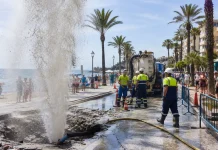








A burst high-pressure drinking water pipe in Benalmádena on Spain’s Costa del Sol caused alarm after large volumes of water mixed with soil and sediment, turning part of the Mediterranean Sea brown near popular beaches.
Authorities confirmed the incident was not caused by sewage contamination and stated that the discoloured water resulted from clean drinking water carrying earth into the sea. A temporary yellow flag warning was issued before conditions returned to normal and green flags were restored.
Key Takeaways:
- A high-pressure water main burst near the Los Patos Hotel area in Benalmádena.
- The brown colour in the sea was caused by sediment and soil, not sewage.
- Local authorities confirmed there was no public health contamination risk.
- Yellow warning flags were raised temporarily as a precaution.
- Acosol and Emabesa worked together to maintain water supplies.
- The damaged pipe was described as old and already scheduled for replacement.
- The incident renewed concerns about ageing infrastructure on the Costa del Sol.
Why Did the Sea Turn Brown in Benalmádena?
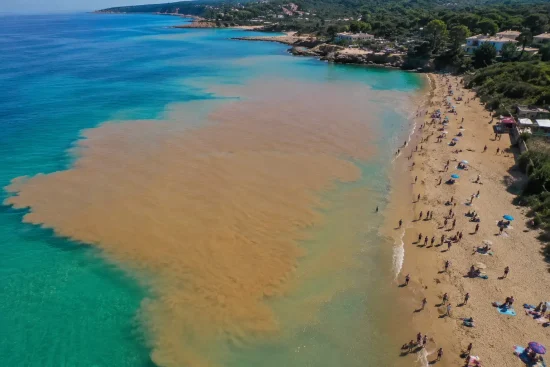
The sudden appearance of brown water along the Benalmádena coastline quickly sparked concern among residents and tourists. Images and videos shared online showed a large brown stain spreading across the sea near several popular beachfront areas, leading many observers to fear a sewage leak or environmental contamination event.
However, local authorities moved quickly to explain the situation. According to Benalmádena Town Hall and public water company Acosol, the incident was caused by the rupture of a high-pressure drinking water pipe within the regional supply network.
The force of the escaping water carried large quantities of soil, mud, and sediment into nearby drainage channels before reaching the sea. Once mixed with seawater, these materials created the dramatic brown discolouration visible from the shoreline.
The Water Main Burst Explained
The damaged pipeline forms part of the main water distribution infrastructure serving areas of Benalmádena and the wider Costa del Sol.
When the pipe ruptured, large volumes of water escaped under significant pressure, creating a visible geyser effect that was captured on video by tourists staying at the nearby Globales Los Patos Park Hotel and Hotel Spa Benalmadena Palace.
To counter mounting panic, Benalmadena Town Hall released an official statement to clarify the exact nature of the spill:
“Public water firm Acosol reported an incident that occurred around midday yesterday in its upstream drinking water supply network in the municipality. After detecting the incident, the water leak was immediately stopped before the impact of the incident was studied and repair work began.”
Describing the affected section of the pipeline as “quite old and deteriorated,” the council firmly reassured the public:
It is drinking water and the image it produced is the result of the natural dragging of earth towards the sea, without any type of contamination as it comes from a high water pipe.
What Happened During the Benalmádena Water Leak Incident?
The incident unfolded around midday when the ageing pipeline suddenly failed. Witnesses reported seeing enormous quantities of water erupting from the ground before flowing towards the coastline.
Video footage showed water spraying with considerable force while nearby beachgoers watched as the sea gradually changed colour. The rapid spread of the brown plume created understandable concern among visitors unfamiliar with the cause.
Emergency teams and water network operators responded quickly. After identifying the source of the leak, Acosol shut down the affected section of the network and began assessing the damage. Repair crews were dispatched immediately to minimise disruption and restore normal operating conditions.
The incident generated significant discussion on social media, with many users questioning whether the water entering the sea was contaminated. Local authorities repeatedly clarified that the event involved drinking water and naturally disturbed sediment rather than sewage discharge.
Local Outrage and Social Media Backlash
While officials were quick to downplay the crisis, local residents and tourists took to social media to express fierce frustration. The incident went viral immediately, sparking intense debate over water conservation and public health.
Many locals pointed out the bitter irony of the situation, as the Costa del Sol has been heavily gripped by strict drought warnings.
One angry resident fumed online: “How many litres of water are going to be lost before the problem is fixed?”
Another resident sarcastically wrote: “And the council turns off the beach showers to raise awareness among people.”
Where Did the Burst Pipe Occur on the Costa Del Sol?
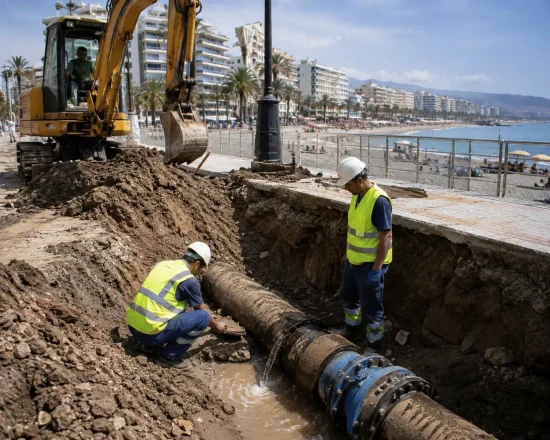
The rupture occurred in Benalmádena, one of the Costa del Sol’s most popular tourist destinations. Reports placed the incident near the Los Patos Hotel area, between Sunset Beach and the Bil Bil Castle zone.
This section of coastline attracts thousands of visitors each year because of its beaches, hotels, restaurants, and seaside promenade. As a result, the dramatic visual impact of the brown water received widespread attention both locally and internationally.
The location also explains why videos of the event spread rapidly online. Numerous holidaymakers staying in beachfront hotels had direct views of the leak and its impact on the sea.
Is the Benalmádena Brown Water Sewage? Contamination Risks Cleared
Public safety became the immediate priority once the leak occurred. The sudden discharge of water into the sea created unusual currents and temporarily altered beach conditions near the affected area.
Although officials stated that the water was not contaminated, local authorities followed standard safety procedures by increasing monitoring and raising warning flags where necessary. These measures were designed to protect swimmers while the situation was assessed and while sediment levels remained elevated.
Once inspections and monitoring confirmed that conditions had stabilised, beaches gradually returned to normal operations. Green flags were eventually restored, signalling that bathing conditions were considered safe once again.
For visitors, this incident highlights the importance of paying attention to local beach flags and official notices. Even when water quality is not affected, temporary hazards such as stronger currents or reduced visibility can justify precautionary restrictions.
| Beach Safety Factor | Assessment During Incident | Outcome |
| Sewage Contamination | Not reported | No evidence found |
| Water Quality Monitoring | Conducted by authorities | Continued until conditions normalised |
| Beach Flag Status | Yellow precautionary flag | Later returned to green |
| Swimming Restrictions | Temporary caution advised | Lifted after assessment |
| Public Health Risk | Considered low | No contamination alerts issued |
| Tourist Access | Mostly maintained | Beaches remained accessible |
How Did Local Authorities Respond to the Incident?
The response from local authorities was relatively swift. Once the source of the problem was identified, emergency repair teams were mobilised to isolate the damaged pipeline and minimise further water loss.
Communication also played a key role. Officials used public statements and media updates to explain the situation and address concerns regarding possible contamination. This helped counter misinformation that circulated online during the early stages of the incident.
At the same time, beach safety personnel monitored conditions along the shoreline while utility operators worked to restore full network stability. Coordination between Acosol, Emabesa, and local government departments ensured that both infrastructure and public safety issues were addressed simultaneously.
The incident demonstrated the importance of having established emergency response plans for utility failures in densely populated coastal regions.
What Impact Did the Incident Have on Beachgoers and Tourists?
For many visitors, the sight of brown water spreading through the Mediterranean was both surprising and concerning. Some tourists initially assumed that a sewage spill had occurred, while others questioned whether local beaches would remain open.
The incident generated substantial attention online, with videos and photographs attracting international interest. This visibility amplified concerns but also increased demand for accurate information.
Many holidaymakers were reassured once authorities explained the true cause of the discolouration. The confirmation that the event involved sediment rather than sewage helped reduce fears about health risks.
From a tourism perspective, the quick response by local authorities was important. Maintaining confidence in beach safety remains essential for destinations that depend heavily on visitor spending and seasonal tourism activity.
How Are Authorities Working to Prevent Future Water Pipe Bursts?

The Benalmádena incident has renewed attention on the need for long-term infrastructure investment across the Costa del Sol. While emergency repairs can restore services quickly, preventing future failures requires a more comprehensive strategy focused on modernisation and proactive maintenance.
Regional authorities and water management companies have already been working on plans to upgrade sections of the network that are considered vulnerable due to age or wear.
These projects involve replacing older pipes with modern materials that are more resistant to corrosion, pressure fluctuations, and environmental stress.
The incident also highlights the importance of balancing infrastructure investment with growing demand. As the Costa del Sol continues to attract residents and tourists, water networks must be capable of supporting higher usage levels while maintaining reliability.
What Are the Environmental Implications of Water Leaks Entering the Sea?
Although the Benalmádena incident did not involve sewage contamination, large-scale water leaks can still have environmental implications that require careful monitoring.
The primary concern in this case was the sudden influx of sediment into coastal waters. High concentrations of suspended particles can temporarily reduce water clarity, affecting visibility for swimmers and marine life. In some situations, sediment can settle on the seabed and impact sensitive habitats.
However, environmental effects from sediment-related incidents are often temporary. Once the source of the disturbance is removed, natural coastal processes gradually disperse and settle the material.
Another important consideration is water wastage. Large pipeline failures can result in significant losses of treated drinking water, placing additional pressure on resources in regions that already face periodic drought conditions.
Environmental agencies and local authorities therefore monitor such incidents closely to assess both immediate and longer-term impacts.
Spain Beach Warnings: How Tourists Can Check Safe Swimming Conditions?
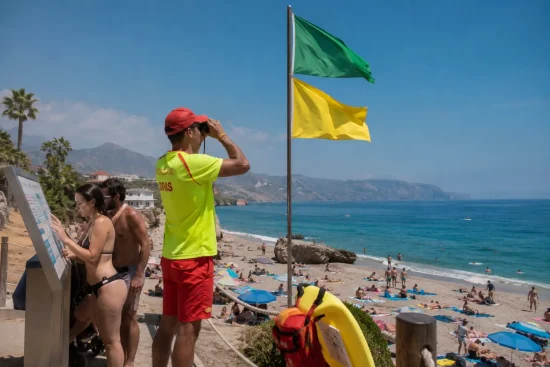
For tourists and residents, staying informed is the best way to make safe decisions during unusual coastal events. Official updates are typically provided through local councils, beach management services, lifeguard teams, and regional authorities.
Beach flag systems remain one of the most visible indicators of current conditions. These flags provide immediate information about swimming safety and should always be followed by visitors.
Visitors planning to swim should always check current conditions before entering the water, particularly after storms, infrastructure failures, or other events that may affect coastal environments.
| Beach Flag | Meaning | Recommended Action |
| Green | Safe swimming conditions | Swimming permitted |
| Yellow | Exercise caution | Increased awareness required |
| Red | Dangerous conditions | Do not enter the water |
| Black or Special Warning | Specific hazard present | Follow authority instructions |
Part of a Wave of Recent Spain Holiday Warnings
The Benalmádena water leak is just the latest in a series of alarming incidents that have disrupted the summer tourist season across Spanish hotspots, leaving holidaymakers on high alert.
The Alicante Dead Rats Incident
Just days prior to the Benalmádena pipe burst, sunseekers at Costa Blanca were left horrified when dozens of bloated, dead rats were seen floating in the sea and littered across the sand at Alicante’s Urbanova and Coco beaches.
Heavy downpours had overwhelmed the local sewage systems, washing the rodents directly into public swimming zones and forcing a wave of safety concerns.
Catalonia Toxic Chlorine Cloud Lockdown
Concurrently, over 160,000 tourists and residents in five popular beach towns near Barcelona (including Vilanova i la Geltru and Calafell) were ordered into an emergency lockdown.
A massive fire at a swimming pool chemical factory released a toxic chlorine gas cloud into the air, forcing authorities to blast emergency alerts to mobile phones telling people to seal their windows and stay indoors.
For travelers planning a Mediterranean getaway, these back-to-back infrastructure failures underscore the vital importance of monitoring local civil protection updates and beach flag systems in real-time.
Conclusion
The Benalmádena water leak attracted significant attention after a burst water main caused part of the Costa del Sol sea to turn brown.
Although the visual impact appeared alarming, authorities confirmed that the incident involved potable water carrying soil and sediment rather than sewage contamination. Emergency crews responded quickly, beach safety measures were implemented, and water supplies were largely maintained through network management strategies.
The event has also highlighted the importance of investing in ageing infrastructure to reduce future risks. As repair and modernisation projects continue, the focus remains on improving network resilience while protecting residents, tourists, and the coastal environment.
Frequently Asked Questions
How long did the brown water remain visible in the sea?
The visibility of the brown plume depended on local sea conditions, currents, and wave activity. Reports indicated that the discolouration gradually dispersed after the leak was contained and sediment began settling naturally.
Were any beaches closed because of the water leak?
Authorities implemented precautionary safety measures and raised yellow warning flags in affected areas. However, the incident did not result in widespread long-term beach closures, and normal conditions were restored once assessments were completed.
What type of water was released from the damaged pipe?
According to official statements, the ruptured pipeline carried potable drinking water. The brown colour observed in the sea was caused by sediment and soil transported by the escaping water rather than by wastewater.
Can sediment-filled seawater pose health risks to swimmers?
Sediment itself is not necessarily harmful, but it can reduce visibility and affect swimming conditions. Authorities monitored water quality to ensure that contamination indicators remained within acceptable limits before returning beaches to normal operation.
How often do water main bursts occur on the Costa del Sol?
Major incidents of this scale are relatively uncommon, although ageing infrastructure can increase the likelihood of failures over time. Water utilities continuously monitor networks and carry out maintenance to reduce risks.
What warning flags were displayed during the incident?
Yellow caution flags were reportedly used while authorities assessed conditions. These flags advise swimmers to exercise increased care due to potential hazards such as unusual currents or reduced water clarity.
Are further pipeline replacement projects planned in Benalmádena?
Yes. Authorities indicated that the damaged section of pipe was already scheduled for replacement as part of wider infrastructure improvement programmes. Additional upgrades are expected to continue across the region.
How can tourists check current beach conditions before visiting?
Visitors can consult local council websites, lifeguard services, official tourism channels, and regional news updates. Checking beach flag status upon arrival is also recommended to ensure safe swimming conditions.