








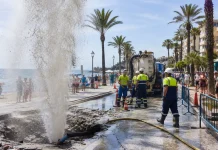








If UK tourists face an emergency or a local state of emergency in Tenerife, the immediate step is to call 112, Spain’s universal emergency number connecting you to the Policia Local, Guardia Civil, and emergency medical services.
English-speaking operators are available 24/7. For real-time environmental crises like Mount Teide wildfires or severe Calima dust storms, follow the State Meteorological Agency (AEMET) colour-coded alerts and official guidance from the Canary Islands Government (Gobierno de Canarias) or the 112 Canarias network.
For urgent consular assistance, stolen passports, or Emergency Travel Documents, contact the British Consulate via the Foreign, Commonwealth and Development Office (FCDO) helpline on +44 20 7008 5000.
Key Takeaways:
- Dial 112 immediately to coordinate unified Spanish emergency response teams, including ambulances, fire departments, and maritime rescue.
- Monitor AEMET weather alerts and follow strict local authority instructions during any declared regional state of emergency.
- Carry both a valid Global Health Insurance Card (GHIC) for public healthcare via the Servicio Canario de la Salud (SCS) and standalone travel insurance for private hospitals like Hospiten Sur or Hospital Quironsalud Costa Adeje.
- Secure an official police report, known locally as a denuncia, from the Cuerpo Nacional de Policia before attempting to claim travel insurance or replacement passport documents.
- Complete the blue and yellow European Accident Statement form (Declaracion Amistosa de Accidente) found inside your hire car glovebox immediately after any roadside collision on island motorways like the TF-1.
- Save essential emergency telephone contacts and store encrypted digital copies of your passport, flight itineraries, and policy documents in secure cloud storage prior to departure.
What Should UK Tourists Do First During an Emergency in Tenerife?
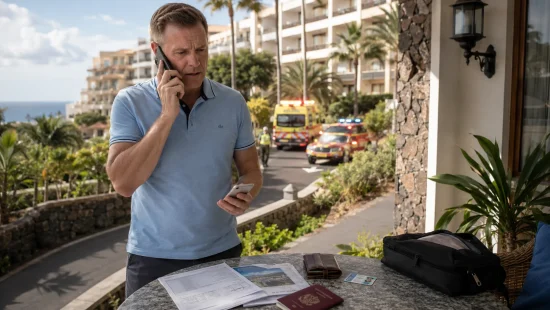
Experiencing an emergency abroad can be overwhelming, particularly when travellers are unfamiliar with local procedures.
The first priority for UK tourists in Tenerife is to remain calm and assess the situation. Panic often leads to poor decisions, while taking a few moments to understand the nature of the emergency can help ensure the correct action is taken.
In any situation involving immediate threats to life or safety, dial 112 immediately to deploy:
- Ambulancia: Urgent medical response and paramedic triage.
- Policía Local / Guardia Civil: Law enforcement for safety or road incidents.
- Bomberos: Fire and rescue services.
Travellers should also notify family members where possible and keep their accommodation provider informed if an incident could affect their stay.
Having travel insurance information, passport details, and emergency contacts readily available can make the process of receiving assistance much smoother.
When local authorities declare a state of emergency, visitors should monitor official announcements, avoid restricted areas, and follow safety instructions issued by emergency services.
Which Emergency Number Should British Tourists Call in Tenerife?
The most important number every British traveller should know is 112. This single emergency number provides access to multiple emergency services across Tenerife and the wider Canary Islands.
Unlike some countries where separate numbers exist for police, ambulance, and fire services, Spain operates a unified emergency response system.
This simplifies the process for tourists who may not be familiar with local emergency procedures.
| Emergency Service | Contact Number | Available in English | Purpose |
| Emergency Services | 112 | Yes | Police, ambulance, fire, sea rescue |
| FCDO Emergency Assistance | +44 20 7008 5000 | Yes | Consular emergencies |
| Hospiten Sur | +34 922 750 022 | Yes | Private medical treatment |
| Travel Insurance Emergency Line | Policy Dependent | Usually | Claims and assistance |
| Local Police Stations | Local Numbers | Varies | Crime reporting |
The 112 service operates 24 hours a day and should be used whenever immediate assistance is required.
Operators can direct the appropriate emergency teams to the caller’s location and provide instructions while help is on the way.
Where Should UK Tourists Go for Medical Emergencies in Tenerife?
Medical emergencies can range from minor illnesses to life-threatening conditions. Tenerife has a well-developed healthcare system that serves both residents and international visitors.
Emergency Hospital Treatment
For serious emergencies such as chest pain, major injuries, severe allergic reactions, or loss of consciousness, calling 112 should always be the first step. Emergency responders can assess the situation and determine the most appropriate medical facility.
Many British tourists staying in southern Tenerife are familiar with Hospiten Sur and Hospital Quirónsalud Costa Adeje.
Both facilities regularly treat international visitors and often have English-speaking staff available.
Medical treatment standards in Tenerife are generally high, but costs can be substantial when private healthcare services are required. This is one reason why comprehensive travel insurance remains essential.
Urgent Medical Care for Non-Life-Threatening Conditions
Not every medical issue requires a hospital visit. Ear infections, stomach illnesses, minor injuries, dehydration, and sun-related conditions are often treated more efficiently through urgent care clinics.
These facilities can reduce waiting times while providing effective treatment for conditions that may disrupt a holiday without posing a significant threat to health.
Dr Lara, a travel medicine specialist who advises frequent international travellers, explains: “Many visitors head straight to hospital for relatively minor illnesses. In most cases, local urgent care clinics can provide faster treatment while reducing unnecessary stress during a holiday.”
Using Local Pharmacies for Minor Health Issues
Spanish pharmacies are often more helpful than many UK travellers expect. Pharmacists can recommend treatments for common conditions and provide guidance on medication availability.
If travellers have forgotten prescription medication, pharmacists may be able to suggest solutions depending on the circumstances and local regulations.
Many resort areas also have pharmacies operating on rotating schedules to ensure access outside normal opening hours.
Does the GHIC Card Cover Medical Treatment in Tenerife?
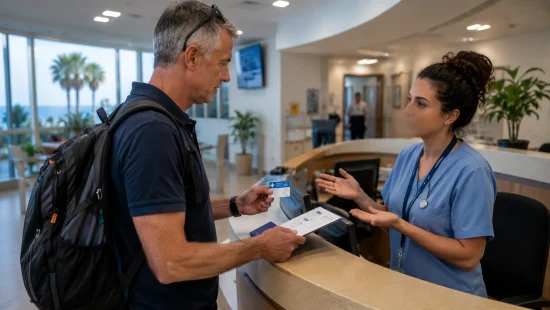
The Global Health Insurance Card (GHIC) allows eligible UK residents to access medically necessary healthcare within Spain’s public healthcare system under similar conditions to local residents.
Although valuable, the GHIC should not be viewed as a complete substitute for travel insurance.
It provides access to public healthcare services but has limitations that travellers should understand before departure.
| GHIC Coverage | Included | Not Included |
| Public Healthcare Access | Yes | No |
| Emergency Treatment | Yes | No |
| Private Hospital Treatment | No | Yes |
| Medical Repatriation | No | Yes |
| Lost Property Claims | No | Yes |
| Trip Cancellation Cover | No | Yes |
| Emergency Accommodation | No | Yes |
Crucial Healthcare Distinction: The GHIC operates exclusively within the Servicio Canario de la Salud (SCS), which is the local public health network in the Canary Islands.
Private facilities, like Hospiten Sur or Hospital Quironsalud Costa Adeje, do not accept the GHIC for standard medical bills. If you accidentally present your GHIC at a private facility thinking it is a public clinic, you may face immense out-of-pocket expenses.
This is precisely why having standalone, comprehensive travel insurance is mandatory to protect your financial health.
The card can reduce medical expenses and simplify access to healthcare services. However, tourists who rely solely on a GHIC may face significant costs if private treatment or specialist transport becomes necessary.
Travellers should apply for a GHIC before travelling whenever possible and carry either the physical card or a secure copy of the information.
Why Is Travel Insurance Still Essential for UK Tourists?
Travel insurance serves a completely different purpose from the GHIC. While the GHIC assists with public healthcare access, insurance provides broader financial protection against unexpected events.
Medical evacuation, emergency accommodation, flight cancellations, baggage loss, theft, and legal expenses may all fall under travel insurance policies depending on the level of cover purchased.
During periods when Tenerife experiences weather-related emergencies or travel disruptions, insurance can become particularly valuable. Accommodation extensions, rebooking costs, and alternative transport arrangements may be expensive without adequate cover.
Travellers should review policy exclusions carefully and ensure emergency contact numbers are saved before departure.
What Should You Do If Your Passport Is Lost or Stolen in Tenerife?
Losing a passport abroad can be stressful, but it does not necessarily mean a holiday must end in chaos. Following the correct process can help resolve the issue efficiently.
Reporting the Loss to Local Police
The first step is to report the loss or theft to the local police. Officers will issue a police report, commonly known as a denuncia, which serves as official documentation.
This report is often required by insurance providers and consular authorities. Without it, obtaining replacement documentation may become more difficult.
Contacting the British Consulate
Once the police report has been obtained, travellers should contact the British Consulate or the Foreign, Commonwealth and Development Office (FCDO) emergency line.
Officials can provide guidance regarding replacement travel documentation and other forms of consular assistance.
Applying for an Emergency Travel Document
If a passport cannot be recovered before departure, travellers may be eligible for an Emergency Travel Document.
This document enables travel on specific journeys and is commonly used to facilitate a return to the United Kingdom. Supporting documentation, identification evidence, travel details, and applicable fees may be required.
How Can UK Tourists Report Theft or Robbery in Tenerife?
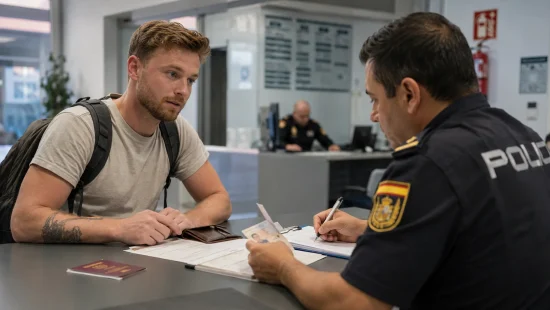
Theft remains one of the most commonly reported incidents involving tourists. Pickpocketing, unattended belongings, and opportunistic theft can occur in busy tourist areas.
Reporting the crime promptly is important for several reasons. Police reports support insurance claims, establish an official record of the incident, and may assist authorities if stolen items are recovered.
Visitors should record details including the time, location, and description of stolen property. If electronic devices are involved, passwords should be changed immediately and network providers contacted without delay.
While recovery of stolen items cannot be guaranteed, swift reporting often improves outcomes and simplifies the insurance process.
What Steps Should British Visitors Take After a Road Accident in Tenerife?
Navigating a car accident in a foreign country can cause panic due to language barriers and unfamiliar traffic regulations.
If you are driving a hire car and get into a collision on the TF-1 motorway or local resort roads, follow these priority steps immediately:
- Secure the Scene: Pull over safely, apply the handbrake, activate your hazard lights, and put on the high-visibility reflective vests required by Spanish law, which are stored inside your hire car.
- Assess Injuries: If anyone is injured or if a vehicle is blocking traffic severely, dial 112 immediately to dispatch the Policia Local or Guardia Civil.
- Complete the Accident Form: Look inside your hire car’s glovebox for the Declaracion Amistosa de Accidente, which is the blue and yellow European Accident Statement form. Fill this out jointly with the other driver only if you both agree on what happened.
- Gather Evidence and Document: Use your smartphone camera to photograph both vehicles, license plates, all localized damage, and relevant road markings from multiple angles.
- Exchange Crucial Details: Exchange full names, vehicle registration numbers, phone numbers, and insurance policy coordinates with the other driver.
- Contact Your Rental Agency: Call the car hire company’s emergency response line before leaving the scene to ensure you do not breach your rental agreement or insurance coverage parameters.
Safety Warning: Never argue over liability at the roadside. If the other driver becomes uncooperative or if liability remains unclear, remain calm, document everything visually, and wait for the police to arrive to draft an official report.
Environmental Emergencies: Calima, Wildfires, and State of Emergency Protocols
Tenerife occasionally experiences severe weather disruptions, ranging from forest fires in the mountainous regions near Mount Teide to intense Calima dust storms carrying fine sand from the Sahara Desert.
When local authorities declare an official weather alert or a temporary state of emergency, your safety depends on relying on verified official reports rather than social media rumors.
The State Meteorological Agency (AEMET) utilizes a strict color-coded alert system that UK tourists must understand:
Yellow Alert: Minor risk. Be aware of localized weather shifts like high winds or climbing temperatures.
Orange Alert: Significant risk. Weather conditions are dangerous, so you should reconsider non-essential travel to high-altitude or forested zones.
Red Alert: Extreme risk. There is severe danger to life. Stay indoors, follow local police orders, and monitor emergency notifications closely.
Official Advisory: If a local state of emergency is active, look for official updates from the Canary Islands Government (Gobierno de Canarias) or the 112 Canarias emergency network.
If you face travel disruptions, flight cancellations, or mandatory evacuations due to severe weather, contact your travel insurance provider immediately to verify your coverage parameters for alternative accommodation and rebooking fees.
Why Should UK Tourists Take Ocean Safety Seriously in Tenerife?
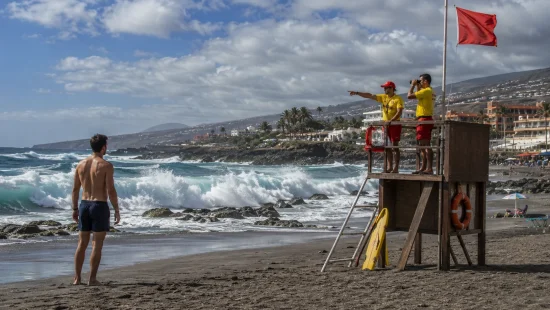
Tenerife’s coastline attracts millions of visitors annually, but the Atlantic Ocean presents different conditions from those many British tourists may be accustomed to.
Strong currents, changing tides, and unpredictable wave patterns can create hazardous conditions even on otherwise pleasant days. Lifeguard warnings and beach flag systems exist for important safety reasons.
A red flag indicates that entering the water is unsafe. Ignoring such warnings can place swimmers at significant risk and may also endanger rescue personnel.
Families travelling with children should pay particular attention to changing conditions and remain within supervised beach areas whenever possible.
Visitors should also avoid swimming alone, especially during periods of rough seas or adverse weather.
What Are the Most Important Emergency Contacts for UK Tourists in Tenerife?
| Service Category | Emergency Organization or Entity | Direct Contact | Language Support and Notes |
| All-in-One Emergency | Multi-Agency Dispatch Center (Policia, Ambulancia, Bomberos) | 112 | English and Spanish 24/7 coverage |
| Consular Assistance | Foreign, Commonwealth and Development Office (FCDO) | +44 20 7008 5000 | English support for urgent passports and consular emergencies |
| National Crime and Theft | Cuerpo Nacional de Policia (National Police) | 091 | Spanish-speaking dispatch; handles criminal offences and official denuncias |
| Local and Traffic Incidents | Policia Local (Municipal Police) | 092 | Handles municipal order, local road accidents, and noise complaints |
| Public Healthcare | Servicio Canario de la Salud (SCS) | Call 112 for triage | Access to emergency public doctors via your GHIC card |
| Private Medical (South) | Hospiten Sur (Playa de las Americas) | +34 922 750 022 | Dedicated English-speaking staff and tourist infrastructure |
| Private Medical (South) | Hospital Quironsalud Costa Adeje | +34 922 752 888 | Fully equipped for international tourists and private insurers |
| Online Crime Report | Spanish Police Portal (Denuncia Online) | denuncias.policia.es | Available with online translations; mandatory for insurance claims |
| Health Card Portal | Official NHS GHIC Application | nhs.uk | Free application portal; apply strictly before traveling |
How Can Travellers Prepare Before Leaving for Tenerife?
Preparation remains one of the most effective ways to minimise the impact of emergencies abroad.
Travellers should verify that passports remain valid, travel insurance policies are active, and emergency contact information is easily accessible. Copies of key documents should be stored securely online and separately from physical originals.
Mobile phones should contain emergency numbers, insurance contacts, accommodation details, and airline information before departure.
It is also wise to familiarise oneself with local healthcare facilities and understand how emergency services operate in Tenerife.
Simple preparation often transforms potentially stressful situations into manageable inconveniences.
What Does a Tenerife State of Emergency Mean for UK Holidaymakers?
A state of emergency does not automatically mean visitors should cancel travel plans. The exact impact depends on the nature of the emergency and the areas affected.
In many cases, emergency declarations are precautionary measures designed to protect residents and visitors. They may involve weather alerts, restrictions on certain activities, temporary road closures, or increased emergency preparedness.
Travellers should distinguish between confirmed official guidance and rumours circulating online. Reliable information should always come from local authorities, official travel advisories, and recognised emergency services.
Holidaymakers who stay informed and follow instructions can often continue their visits safely, even when emergency measures are temporarily in place.
What Practical Example Shows How a UK Tourist Can Handle an Emergency Effectively?
Consider a British family staying in Costa Adeje when a severe weather warning is issued.
They receive notifications from local authorities advising residents and tourists to avoid coastal areas due to dangerous sea conditions. Instead of ignoring the warning, they remain at their accommodation, monitor official updates, and postpone planned beach activities.
Later, one family member develops a minor medical issue. Rather than heading directly to a hospital, they visit a local urgent care clinic and receive treatment quickly.
Because they had travel insurance, GHIC details, emergency contacts, and copies of travel documents readily available, the situation remains manageable and causes minimal disruption to their holiday.
This example demonstrates how preparation, awareness, and prompt action can significantly reduce stress during unexpected events.
Conclusion
For most visitors, Tenerife remains a safe and welcoming destination with excellent tourist infrastructure and healthcare services. However, understanding how to respond during an emergency can make a significant difference when unexpected situations arise.
Whether dealing with a medical issue, lost passport, theft, road accident, or weather-related disruption, knowing the correct procedures helps travellers stay calm and make informed decisions.
By saving important contact numbers, carrying both a GHIC and travel insurance, and following official guidance, UK tourists can navigate a Tenerife emergency more confidently and protect both their safety and their holiday experience.
Frequently Asked Questions
What is the main emergency number for UK tourists in Tenerife?
Call 112 for Spain’s universal emergency number covering police, ambulance, fire, and sea rescue services. Operators speak English and are available 24/7 to dispatch help immediately.
Can I use my old EHIC card in Tenerife?
No, the old EHIC is no longer valid for most UK tourists. You must apply for a free Global Health Insurance Card (GHIC) via the NHS website before you travel.
Does the GHIC card cover private hospital treatment in Tenerife?
No, the GHIC only covers medically necessary treatment at local public facilities like the Servicio Canario de la Salud. Private facilities like Hospiten Sur require comprehensive travel insurance.
What should I do if my passport is lost or stolen in Tenerife?
Report the loss immediately to the local police to obtain an official police report, known as a denuncia. Then, contact the British Consulate or call the FCDO at +44 20 7008 5000 to apply for an Emergency Travel Document.
How do I report a theft or robbery for an insurance claim?
You must file an official police report (denuncia) either in person at a local National Police station or online via the Spanish police portal. Insurers will require this document before paying out a claim.
What should I do if I am involved in a road accident in a hire car?
Ensure everyone is safe, photograph the vehicles, and exchange contact and insurance details with the other driver. Fill out the European Accident Statement form found in your glovebox and notify your rental agency immediately.
How do I find a 24-hour pharmacy or get help during a weather alert?
Look for an illuminated, flashing green cross outside local storefronts to find an open pharmacy on a rotating shift. For weather emergencies, monitor updates from 112 Canarias.