




















Last Updated: 10.10.2026
The Somerset EV battery plant construction project has moved into a major new phase in 2026, with Agratas beginning internal work on Building One while electricity, utilities and supporting infrastructure continue to develop around the Bridgwater site.
Agratas, part of the Tata Group, is building the battery manufacturing facility at the Gravity site in Somerset.
The project is intended to establish large-scale domestic battery production for the UK automotive industry and reduce reliance on imported battery cells.
The development has attracted national attention because of its scale, government backing, relationship with Tata and Jaguar Land Rover, and potential to create thousands of jobs.
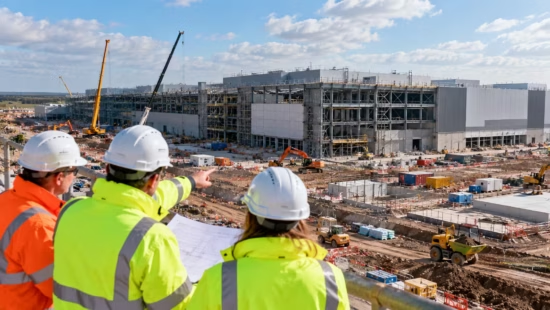
As of October 2026, Agratas says the external cladding of Building One is almost complete and the first mechanical, electrical and plumbing systems are being installed inside the factory. Specialist clean and dry rooms required for battery production are expected to follow.
How Did the Somerset EV Battery Plant Project Start?
The Somerset battery project developed from Tata Group’s wider plan to establish significant battery manufacturing capacity in the UK.
Agratas was created as Tata Group’s battery business, with the Somerset facility becoming one of its most important UK manufacturing investments.
Bridgwater was chosen for the project, with the development forming a central part of the Gravity Enterprise Zone.
The location provides extensive brownfield land, access to the M5, utility connections and a workforce base across Somerset and the wider South West.
Construction progressed from early site preparation and infrastructure work towards Building One, which will contain the first large-scale battery manufacturing operations.
The factory also sits within the wider transition towards electric transport, where businesses considering EV adoption may face different vehicle-cost and tax treatment depending on whether they buy or lease, particularly because self-employed car lease tax deductions depend on business use, emissions and the method used to claim vehicle costs.
Somerset EV Battery Plant Construction Timeline
2024: Construction Begins
Major construction activity began as the Somerset site started its transformation into a large-scale battery manufacturing complex.
Early work focused on preparing the land, developing infrastructure and creating the foundations required for the main production buildings.
2025: Building One Takes Shape
Construction accelerated during 2025 as Building One became clearly visible across the Gravity site.
Structural steel, floor areas, utilities and supporting infrastructure progressed as the project moved beyond initial enabling works.
The Central Utilities Building also began taking shape, providing infrastructure that will eventually support factory operations.
2026: Steel Frame, Cladding And Infrastructure Progress
Construction moved significantly forward during 2026.
Building One progressed from its primary structural phase into cladding, floor construction and service installation.
The project also received substantial government backing, reinforcing its position as one of the UK’s most strategically important advanced-manufacturing investments.
October 2026: Internal Fit-Out And Power Connection Works
October 2026 marked one of the most important construction transitions so far.
Agratas confirmed on 5 October that external cladding on Building One was almost complete and construction activity was beginning to move inside.
Mechanical, electrical and plumbing systems are now being installed, while specialist clean and dry environments required for battery production are expected to follow.
At the same time, major electricity infrastructure is being installed to connect the development to the national grid.
Late 2027: Initial Battery Production Target
The next major objective is to move from construction into battery manufacturing.
Building completion alone will not make the factory operational.
Production equipment, automated systems, environmental controls and utilities must be installed, commissioned and tested before battery cells can be manufactured commercially.
What Are the Latest Official Updates From Agratas And Somerset Council?
Agratas released one of the most significant official project updates on 5 October 2026.
The company confirmed that the external cladding of Building One was almost complete and teams had begun moving inside the facility.
Current and upcoming work includes:
- Mechanical Systems: The first mechanical infrastructure is being installed
- Electrical Systems: Electrical services needed for manufacturing are progressing
- Plumbing Systems: Plumbing work has started as part of the internal fit-out
- Clean Rooms: Specialist controlled manufacturing areas are planned
- Dry Rooms: Low-humidity environments will be created for battery-production processes
- Goods Handling Building: The steel frame for the goods-in and goods-out building has been erected
- Concrete Works: An on-site batching plant is supporting construction of ground-floor slabs
Agratas says the internal fit-out represents the next stage in turning Building One from a large industrial structure into a functioning battery manufacturing facility.
Somerset Council has also confirmed major progress outside the factory building itself.
A high-powered electricity connection is being installed between the Gravity site and the national grid.
The route crosses beneath the M5 between Junction 23 at Dunball and Junction 24 at Huntworth.
Work was due to begin on 5 October 2026 and last for up to 15 days, with overnight motorway closures and temporary traffic arrangements required during parts of the installation.
The electricity connection is essential because battery-cell manufacturing requires a substantial and reliable power supply.
What Is the Latest Somerset EV Battery Plant Construction Update?
The Somerset project has now progressed beyond the main structural construction stage.
Building One is moving towards internal manufacturing preparation.
The latest developments include:
- External Cladding: Almost complete
- Internal Fit-Out: Now underway
- MEP Installation: Mechanical, electrical and plumbing work has started
- Clean And Dry Rooms: Specialist production areas are planned
- Goods Handling Building: Structural work is progressing
- Ground-Floor Slabs: Concrete works are advancing
- Grid Connection: High-powered electricity infrastructure is being installed
- Manufacturing Preparation: The focus is increasingly shifting towards operational readiness
The change is significant because battery factories require far more than a completed building.
Production lines, automation equipment, controlled environments, monitoring systems and quality processes must all be integrated before manufacturing can begin.
Is the Somerset Gigafactory Construction Going To Plan?
Construction is continuing, although the project has experienced changes in delivery arrangements and scheduling.
Large industrial projects often move through different contractors and construction models as requirements change between structural construction and specialist manufacturing installation.
Agratas’ October update shows that Building One has reached the point where internal fit-out can proceed.
The national-grid connection, supporting buildings and internal service installations also demonstrate that several parts of the development are progressing simultaneously.
However, it is important to separate physical building completion from full operational readiness.
The project still needs to move through several stages:
- Complete The Factory Envelope
- Install Internal Services
- Create Specialist Manufacturing Areas
- Install Production Equipment
- Integrate Automation
- Commission Machinery
- Train Workers
- Validate Production Processes
- Begin Commercial Manufacturing
This means a completed external structure does not mean the factory is ready to produce batteries immediately.
Why Did Sir Robert McAlpine Leave the Project?
Sir Robert McAlpine delivered an earlier phase of work on the Somerset gigafactory before its involvement in the project ended.
The contractor change attracted attention because changes involving a major construction company can raise questions about project costs, schedules and delivery.
However, the transition did not mean construction had stopped or the battery plant had been cancelled.
By the time the construction model changed, substantial structural and site infrastructure work had already been completed.
Agratas subsequently moved towards a different construction delivery arrangement for the next stage of the development.
The change therefore reflects a transition between construction phases rather than the abandonment of the project.
What Is TSL Delivering Next?
TSL became involved as the Somerset development entered its next phase.
The focus is increasingly shifting from major structural construction towards internal infrastructure, specialist installation and preparation for battery manufacturing.
Future work requires coordination between:
- Construction Contractors
- Electrical Engineers
- Mechanical Engineers
- Automation Specialists
- Equipment Suppliers
- Manufacturing Teams
- Logistics Providers
- Safety And Quality Teams
This stage is more technically complex because the building must be transformed into a highly controlled manufacturing environment.
How Much Is Being Invested In the Somerset Gigafactory?
The Somerset gigafactory represents one of the largest advanced-manufacturing investments currently underway in the UK.
Government subsidy documentation has referred to a capital grant of up to £380 million supporting approximately £5 billion of private investment in the Agratas project.
The investment covers far more than the physical factory building.
Battery manufacturing requires expensive production machinery, specialist utilities, automation, testing systems and supporting infrastructure.
Large technology-led manufacturing projects can also involve qualifying development expenditure, although whether particular work meets the rules for HMRC R&D tax claims depends on whether it seeks an advance in science or technology and resolves genuine technological uncertainty.
Government backing for Agratas also reflects the strategic importance of creating domestic battery capacity rather than relying heavily on overseas cell production.
Why Has the Somerset Gigafactory Attracted So Much Attention?
The Somerset battery factory has attracted significant attention because several major economic and industrial issues come together within one project.
First, the physical scale is substantial.
Somerset Council says Building One is approximately 525 metres long and the Agratas development is reindustrialising around 308 acres of brownfield land.
Second, Agratas belongs to Tata Group, which also owns Jaguar Land Rover.
That relationship gives the Somerset factory strategic importance within Britain’s automotive manufacturing sector.
Third, substantial public funding is supporting the development.
Government involvement reflects concerns about whether the UK can build enough domestic battery manufacturing capacity to support future electric vehicle production.
The plant has also become a regional economic story because of the number of workers, apprentices, suppliers and service businesses expected to be associated with the development.
How Many Jobs Will the Somerset Gigafactory Create?
The Somerset battery plant is expected to become a major source of employment in the region.
Government and project announcements have referred to roughly 4,000 to 4,200 direct jobs once the facility reaches a more mature operational stage.
Thousands of additional positions could also be supported through construction and the wider supply chain.
Expected occupations include:
- Battery Manufacturing
- Mechanical Engineering
- Electrical Engineering
- Automation
- Maintenance
- Quality Control
- Logistics
- Warehouse Operations
- Information Technology
- Health And Safety
- Human Resources
- Finance
- Supply Chain Management
Apprenticeships are also expected to form part of the workforce strategy.
For employers taking on younger workers and apprentices, wage planning must account for the applicable statutory rates because the 2026 National Minimum Wage rules apply differently according to age and qualifying apprenticeship status.
Building the workforce is therefore happening alongside construction of the factory itself.
When Will the Somerset Gigafactory Start Production?
The project is moving towards initial manufacturing after construction and installation work is completed.
Agratas’ October 2026 update shows that internal services are now beginning to be installed and clean and dry production areas will follow.
Further work will include installing production machinery, automation systems and specialist battery manufacturing equipment.
The factory will then need to go through testing and commissioning before full commercial output can begin.
Production is expected to develop in phases rather than the entire Somerset development becoming operational on a single date.
This distinction is important because Building One represents only one part of the wider long-term development.
How Will the Project Affect Somerset And the UK EV Industry?
The gigafactory could have a substantial effect on Somerset’s economy.
Somerset Council says the facility is expected to generate around £700 million in economic value for the region each year.
Direct employment is only one part of the potential impact.
The development could create opportunities across:
- Construction
- Engineering
- Transport
- Logistics
- Maintenance
- Recruitment
- Training
- Facilities Management
- Professional Services
- Industrial Technology
Businesses located close to Bridgwater may also benefit indirectly as workers and contractors spend money within the local economy.
Nationally, the strategic issue is battery supply.
Electric vehicles require large numbers of battery cells, while dependence on overseas manufacturing can expose vehicle manufacturers to longer supply chains, transport costs and geopolitical disruption.
Domestic battery production could make it easier for UK vehicle manufacturers to source cells closer to their assembly operations.
What Challenges Has the Somerset Gigafactory Faced?
The Somerset project has faced several challenges typical of very large industrial developments.
Construction Timeline Changes
Building a battery factory is considerably more complicated than constructing an ordinary warehouse.
Specialist utilities, controlled production environments and manufacturing technology must be incorporated into the development.
As these requirements evolve, construction schedules can also change.
Contractor Transition
The departure of Sir Robert McAlpine attracted attention and raised questions about project delivery.
However, subsequent construction updates have shown that work has continued under the evolving delivery model.
Power Requirements
Battery manufacturing requires substantial electricity capacity.
The October 2026 M5 cable work shows that some of the most important construction activity is taking place beyond the factory itself.
Workforce And Skills
Agratas will need workers with specialist manufacturing, automation, maintenance, logistics and engineering skills.
Recruiting and training this workforce must happen before production reaches significant scale.
What Happens Next With Somerset EV Battery Plant Construction?
Construction is now moving from the heavy structural phase towards manufacturing readiness.
The next stages are expected to include:
- Complete Internal Fit-Out: Mechanical, electrical and plumbing systems will continue to be installed
- Create Clean And Dry Rooms: Controlled environments will be prepared for battery manufacturing
- Finish Factory Floors: Ground-floor slab construction will continue
- Complete Utility Infrastructure: Power, water and other industrial services will be connected across the building
- Finish Grid Connection: The high-capacity electricity supply must be integrated
- Install Production Machinery: Specialist battery manufacturing equipment will be brought into the factory
- Install Automation: Production and material-handling systems will be connected
- Commission Equipment: Machinery and systems will be tested
- Train Employees: Manufacturing teams will prepare for production
- Validate Processes: Battery manufacturing procedures will be tested before commercial output increases
The October 2026 update is therefore significant because the Somerset EV battery plant construction project is moving beyond simply building an industrial structure.
Agratas is now beginning the more technically demanding process of turning Building One into an operational battery manufacturing facility.
FAQs
Is the Somerset EV Battery Plant Still Being Built?
Yes. Construction remains active in October 2026, with Building One moving into internal fit-out while supporting infrastructure and power connections continue to progress.
Has the Somerset Gigafactory Been Delayed?
The project’s construction schedule and delivery arrangements have changed, but development is continuing and internal installation work is now underway.
Who Owns the Somerset Gigafactory?
The Somerset battery manufacturing facility is being developed by Agratas, a battery company within the Tata Group.
When Will the Somerset Battery Plant Open?
The development is expected to move into manufacturing in phases after internal fit-out, equipment installation, commissioning and production testing are completed.
How Much Is the Somerset Gigafactory Costing?
Government documentation has referred to approximately £5 billion in private capital investment supported by a grant of up to £380 million.
How Many Jobs Will It Create?
Project and government announcements have referred to around 4,000 to 4,200 direct jobs once the facility reaches a more mature operational stage, alongside additional construction and supply-chain employment.
What Is the Latest Somerset Gigafactory Construction Update?
As of October 2026, Building One’s external cladding is almost complete, internal mechanical, electrical and plumbing work has started, specialist clean and dry rooms are planned and major grid-connection work is progressing.