



















The debate surrounding the UK-France energy relationship centers on whether British consumers are indirectly subsidizing electricity used by French households through cross-border interconnectors.
Driven by the mid-2026 Middle East geopolitical crisis, soaring UK industrial electricity costs now double the European average and four times higher than the US, have pushed manufacturing confidence to a four-year low.
Critics argue that grid transmission bottlenecks force the UK to pay northern wind farms to shut off while firing up expensive southern gas plants to export cheap power to France, effectively forcing British taxpayers to pay twice.
While supporters and government officials maintain that closer UK-EU electricity market integration improves overall energy security and system resilience, energy experts remain fiercely divided on how quickly domestic relief schemes like BICS can protect the UK industrial base from accelerating deindustrialization.
Key Takeaways:
- The Geopolitical Shock: The mid-2026 Iran war has triggered massive spikes in global oil and gas prices, forcing 60% of hit UK companies to pass compounding energy costs down to consumers.
- The French Subsidy Loophole: Internal UK grid bottlenecks mean cheap northern wind power cannot easily reach the south for export; operators must pay wind farms to turn off and fire up expensive gas plants to supply France, creating an estimated £770 million annual wealth transfer out of the UK.
- Devastating Industrial Toll: A landmark Make UK survey reveals that 25% of UK manufacturers plan to or have already offshored production, while 10% face complete insolvency within the next 12 months due to uncompetitive energy rates.
- The BICS Timing Flaw: Although the British Industrial Competitiveness Scheme (BICS) offers up to 25% bill relief for heavy energy users, its delayed April 2027 operational rollout comes too late to solve immediate cash-flow crises.
- The Market Integration Debate: Sir Keir Starmer’s proposed UK-EU electricity market reset aims to make cross-border trading more efficient, but industry bodies warn it is “no silver bullet” and risks exacerbating domestic pricing structural flaws.
What Is the UK-France Energy Deal?
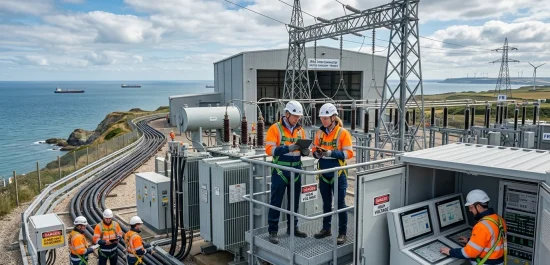
The UK-France energy relationship is built around electricity interconnectors that connect the two countries’ power grids. These interconnectors allow electricity to move across borders depending on demand, supply levels, and market prices.
In recent months, the discussion has intensified following proposals to improve electricity market cooperation between the UK and European partners.
Supporters view greater integration as an opportunity to improve efficiency and strengthen energy security. Critics, however, question whether the current system adequately protects British consumers and businesses from rising costs.
At the centre of the debate is whether existing renewable energy subsidies and electricity market arrangements unintentionally benefit consumers outside the UK.
Why Has the UK-France Energy Agreement Become a Political Issue?
Energy costs have become one of the most important economic issues facing the UK. Businesses, manufacturers, and households continue to face pressure from elevated electricity prices compared with many international competitors.
The controversy surrounding the UK-France energy relationship intensified after claims emerged that British consumers could be helping subsidise electricity exports through renewable energy support schemes.
The 2026 Geopolitical Catalyst
This debate is no longer theoretical. Following the outbreak of the Iran war in mid-2026, subsequent spikes in global oil and gas prices have pushed UK manufacturing confidence to a devastating four-year low.
Industrial businesses have been hit by an immediate, compounding surge in their energy bills, forcing a massive 60% of companies to pass these soaring costs directly onto consumers.
Despite these price hikes, 98% of manufacturers surveyed admit they face a severe and immediate squeeze on their profitability.
The Connection Between UK-EU Energy Cooperation and Consumer Bills
Supporters of greater market integration argue that electricity should flow to wherever it is needed most, improving efficiency across Europe.
Critics contend that market integration must be balanced against domestic affordability and industrial competitiveness.
Are British Taxpayers Subsidising French Energy Bills?
This question sits at the heart of the current debate.
The claim originates from situations where subsidised renewable electricity generated in Britain can be exported through interconnectors. On days when wind generation is particularly strong, electricity prices may fall significantly, making exports attractive.
Critics argue that because UK consumers help fund renewable energy support schemes, overseas consumers can indirectly benefit from electricity produced with British financial support.
However, supporters of interconnectors note that electricity trading works in both directions. During periods of low renewable generation or high demand, Britain can import electricity from neighbouring countries rather than relying entirely on domestic gas generation.
The key point is that the issue remains a policy debate rather than a universally accepted fact.
How the Subsidy Debate Emerged?
Much of the controversy stems from concerns about grid constraints and electricity transmission bottlenecks within the UK.
Why Critics Believe UK Consumers Are Bearing the Cost?
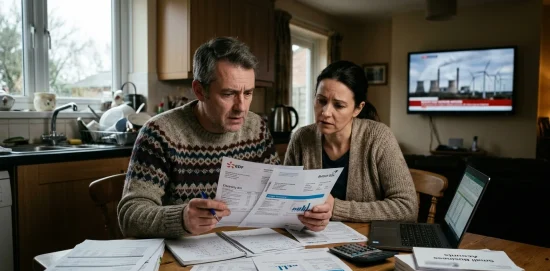
To understand how British taxpayers inadvertently subsidize French households, one must look closely at the physical bottlenecks plaguing the UK grid network:
Most of the UK’s cheap, green wind power is generated by wind farms concentrated in Scotland and northern England.
However, the physical grid infrastructure lacks the capacity to safely carry this massive amount of power down to the south of England to be exported via the subsea interconnectors.
This creates a costly, highly inefficient two-step loop:
- The Wind Interruption: Grid operators have to step in to “balance” the system by paying northern wind farms to completely shut off their turbines to avoid overloading the grid.
- The Gas Substitution: To fulfill the energy export contracts promised to France, the operator must fire up expensive, carbon-heavy gas-fired power plants located in the South East.
As a result, French buyers get to purchase energy at cheap, wind-driven market prices, while British consumers get “shafted” by paying twice, once to subsidize the northern wind developers, and a second time to pay for the expensive emergency gas generation in the south.
Octopus Energy estimates that this structural flaw will drain a staggering £16 billion between 2030 and 2050, averaging roughly £770 million per year in wealth transfers out of the UK.
How Interconnectors Affect the Energy Market?
| Area | Potential Benefits | Potential Challenges |
| Energy Security | Access to imported electricity during shortages | Dependence on international markets |
| Renewable Energy | Better use of surplus renewable generation | Grid congestion can reduce efficiency |
| Consumer Bills | Potential reduction in wholesale prices | Savings may not always reach consumers immediately |
| Market Efficiency | Improved cross-border trading | Complex pricing mechanisms |
| Grid Stability | Additional flexibility during demand spikes | Infrastructure investment costs |
Could the UK-France Energy Deal Reduce Household Energy Bills?
Potentially, yes.
Supporters argue that interconnectors help reduce wholesale electricity prices by increasing access to lower-cost electricity sources. During periods of high demand, imported electricity may be cheaper than relying on domestic gas generation.
However, household bills are influenced by many factors beyond wholesale prices, including network costs, policy charges, supplier costs, and taxes.
Potential Benefits for Consumers
Greater market integration may improve efficiency and reduce unnecessary system costs.
Why Savings May Not Be Immediate?
Any wholesale savings may take time to filter through to retail energy bills, particularly if wider market costs remain elevated.
Why Are UK Industrial Energy Prices Higher Than Those in France and Germany?
This is one of the most significant challenges facing British industry.
Manufacturers consistently report that electricity costs in the UK exceed those faced by competitors in several European countries. Energy-intensive sectors are particularly affected.
The Impact of Energy Taxes and Levies
Many business groups argue that policy costs, carbon-related charges, and network levies contribute significantly to industrial electricity prices.
Differences in National Energy Systems
France benefits from a large nuclear generation fleet, while the UK remains more exposed to gas price fluctuations.
Industrial Energy Cost Factors
| Country | Grid Gas Dependence | Policy/Levy Burden on Industry | Government Mitigation Schemes |
| United Kingdom | High: Gas influences electricity pricing and accounts for approximately 30% of electricity generation, leaving the market exposed to international gas price volatility. | Severe: Carbon costs, network charges, and policy levies can account for around 50% of industrial electricity bills, placing significant pressure on manufacturers. | British Industrial Competitiveness Scheme (BICS): Designed to reduce electricity costs for eligible energy-intensive industries by up to 25%, although some industry groups argue the 2027 implementation timeline may be too late for struggling firms. |
| France | Very Low: Gas contributes only around 3% of electricity generation due to the country’s extensive nuclear power infrastructure. | Lower Burden: Energy-intensive industries benefit from reduced exposure to policy costs and receive greater protection from energy-related taxes and levies. | State Support Measures: The French government absorbs a larger share of energy-related costs through public funding mechanisms, helping maintain industrial competitiveness. |
| Germany | Moderate: Gas accounts for roughly 16% of electricity generation, with ongoing efforts to expand renewable energy capacity and diversify supply sources. | Managed Through Support Programmes: Energy-intensive sectors receive targeted relief to offset grid transition costs and maintain international competitiveness. | Industrial Relief Programmes: Government-backed subsidies and compensation mechanisms help shield manufacturers from energy transition and infrastructure-related cost increases. |
How Serious Is the Threat of UK Deindustrialisation?
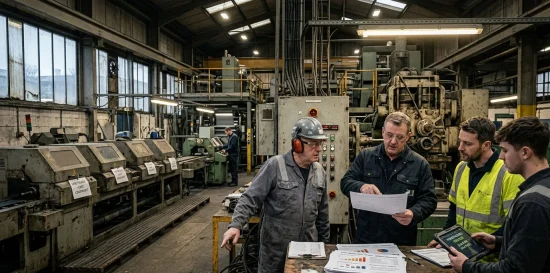
Industry organisations have increasingly raised concerns about Britain’s manufacturing future.
Findings from the Make UK Survey
Data released by the manufacturers’ trade body, Make UK, paints a bleak picture of an industrial sector on the brink of collapse.
UK factories are currently forced to operate with electricity costs that are twice the average of mainland Europe and a staggering four times higher than their competitors in the United States.
According to feedback from thousands of member companies:
- Production Offshoring: 25% (one in four) of UK manufacturing firms have either already moved their production lines overseas or are actively planning to do so to survive.
- Insolvency Risk: 10% (one in ten) of domestic manufacturers believe it is likely or very likely they will face complete insolvency and bankruptcy within the next 12 months.
- Economic Stagnation: In a desperate bid to preserve cash flow, 38% of firms have delayed vital capital investments, while 21% have been forced to cut their employee headcount.
Stephen Phipson, chief executive of Make UK, issued a stark warning to the Treasury: “The time for talking is over. The time for action is now. Britain faces deindustrialisation unless manufacturers get relief from high energy prices.”
The British Industrial Competitiveness Scheme (BICS): A Dangerous Mismatch in Timing
The core issue with the British Industrial Competitiveness Scheme (BICS) is a dangerous mismatch in timing.
While the government expanded the scheme to cut electricity costs by up to 25% for roughly 10,000 heavy energy-using businesses, the policy does not actually take operational effect until April 2027.
Even though the government promised that these subsidies would eventually be backdated, industry leaders argue that a backdated check cannot fix a fatal cash-flow crisis today.
As Make UK pointed out, many of the strategic aerospace and domestic engineering firms that the government expects to support its current defense spending push will likely be completely bankrupt or permanently relocated overseas long before the April 2027 relief arrives.
Highlighting the severity of the crisis, labor leaders have joined manufacturers in demanding an immediate expansion of the government’s support framework.
Paul Nowak, General Secretary of the Trades Union Congress (TUC), explicitly warned of the threat to the workforce, stating:
“The British Industrial Competitiveness Scheme is an important step towards tackling the punishing cost of energy for manufacturers. But with the reckless war in Iran continuing to hammer energy bills, the scheme needs to be expanded further to protect jobs and keep factories and plants running. We need a long-term plan to support workers in manufacturing industries and bring bills down for good.”
How Does the UK’s Dependence on Gas Influence Energy Prices?
The UK remains more dependent on gas than several European neighbours.
This dependence has important consequences because gas often influences electricity prices across the wider market.
Understanding Marginal Pricing
The UK electricity market largely operates under a marginal pricing model. Under this approach, the final generating source required to meet demand often determines market prices.
Why Gas Still Shapes Electricity Costs?
Even when renewable and nuclear generation provide a substantial share of electricity, gas generation can continue to influence pricing outcomes.
Confirmed Facts vs Ongoing Debate
| Topic | Confirmed Facts | Ongoing Debate |
| Interconnectors | They facilitate cross-border electricity trading | Their long-term impact on bills |
| Renewable Subsidies | UK consumers support renewable energy schemes | Extent of overseas benefit |
| Industrial Energy Costs | UK manufacturers face high costs | Best policy solution |
| Market Integration | Can improve trading efficiency | Whether benefits outweigh costs |
| Grid Constraints | Congestion exists in parts of the network | Speed of future upgrades |
Can Interconnectors Improve UK Energy Security and Support Net Zero Goals?
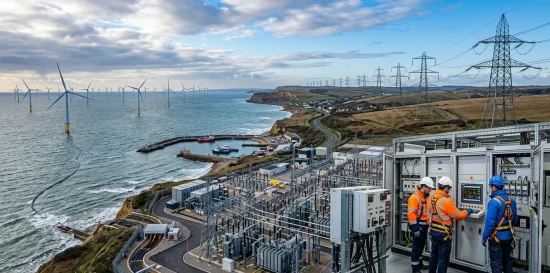
Interconnectors play an increasingly important role in modern electricity systems.
They provide flexibility during periods of high demand, help balance renewable generation, and reduce reliance on individual sources of electricity.
From a net zero perspective, interconnectors support greater use of renewable energy by enabling surplus generation to be shared across borders.
Many energy experts view them as a key component of a more interconnected and resilient European energy system.
Michael Turner, a power systems specialist, explained: “Interconnectors should not be viewed solely through the lens of exports. Their value often becomes most visible during supply shortages, when access to imported electricity can reduce pressure on domestic generation and improve system resilience.”
What Does the Future Hold for the UK-France Energy Relationship?
The future of UK-France energy cooperation will likely be shaped by several factors, including electricity market reform, grid investment, renewable energy expansion, and broader UK-EU relations.
As renewable generation continues to grow, the importance of efficient electricity trading is expected to increase. However, policymakers will also face pressure to ensure that domestic consumers and businesses benefit from energy transition investments.
The debate surrounding interconnector subsidies highlights a wider challenge facing the UK energy system: balancing affordability, competitiveness, energy security, and decarbonisation.
Conclusion
The question of whether British taxpayers are subsidising French energy bills through interconnectors does not have a simple yes-or-no answer.
While concerns about renewable energy subsidies, grid constraints, and electricity exports have gained attention, experts remain divided on the scale and significance of the issue.
What is clear is that UK manufacturers continue to face serious energy cost pressures, while policymakers seek solutions through market reform, industrial support measures, and greater energy cooperation.
As the UK pursues energy security and net zero objectives, the effectiveness of interconnectors and electricity market reforms will remain central to the debate.
Frequently Asked Questions
Are UK taxpayers directly paying French households’ electricity bills?
No direct payment mechanism exists where British taxpayers send money to French households. The debate focuses on whether renewable energy subsidies funded in Britain indirectly benefit overseas consumers through electricity exports.
What is an electricity interconnector?
An electricity interconnector is a high-voltage cable linking the electricity grids of different countries. These connections allow power to flow between markets, helping balance supply and demand while improving energy security.
Why does the UK export electricity when domestic prices are high?
Electricity trading decisions are based on market conditions, supply levels, and pricing mechanisms. At times, exports occur because specific market arrangements make cross-border trading economically efficient, even when domestic prices remain elevated.
Could electricity market reform reduce UK energy bills?
Potentially. Many experts believe reforms could improve efficiency and reduce some costs. However, energy bills are influenced by multiple factors, so reforms alone are unlikely to provide an immediate solution.
Why are UK industrial electricity costs higher than those in France?
Several factors contribute to the difference, including energy policy costs, gas dependence, network charges, and differences in generation mixes. France’s large nuclear sector has historically provided greater price stability.
Can interconnectors help improve energy security?
Yes. Interconnectors provide access to additional electricity sources during periods of high demand or supply shortages. They can reduce pressure on domestic generation and improve overall system resilience.
Will UK-EU electricity market integration lower bills?
Supporters argue that closer integration could improve market efficiency and lower wholesale electricity costs. Critics believe the benefits may be limited unless broader structural issues within the UK energy market are also addressed.